
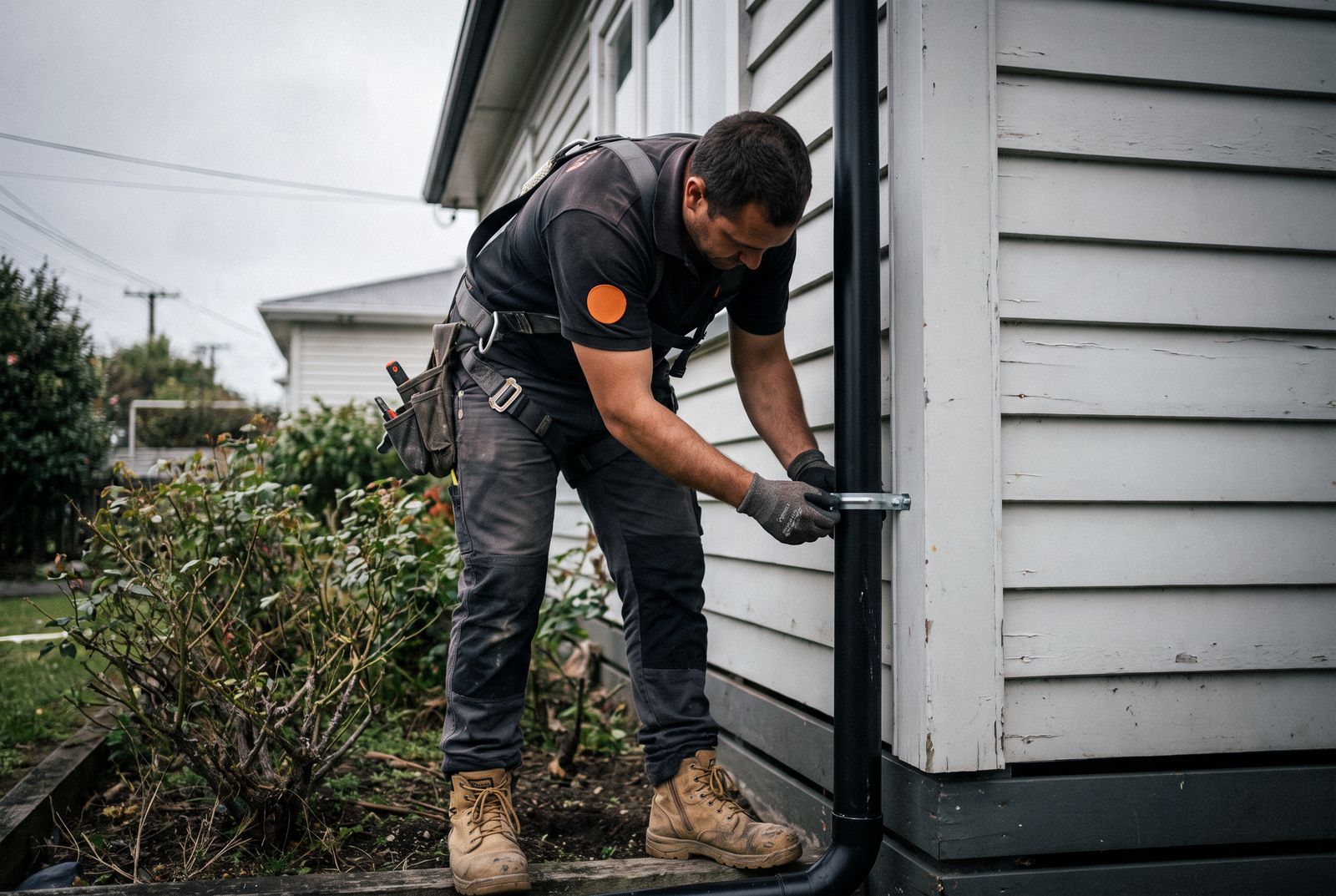
Fascia and downpipes do quiet work until the day they stop. The fascia is the board running along the edge of the roof. It closes off the rafter ends and carries the spouting brackets. The downpipes collect everything the spouting gathers and take it down to ground level. Once a fascia board softens, brackets loosen and the gutter drops. Once a downpipe splits, blocks or empties in the wrong spot, water ends up on the cladding, the foundations or the path.
We repair and replace both, on their own or as part of new spouting or a full re-roof. A lot of fascia damage is only visible after the old gutters come off, so we check the timber during any spouting job and price the repairs before work starts, not halfway through.
Pricing: every roof gets a free on-site measure and an itemised written quote, with a fixed price agreed before any work starts.
Need the gutters themselves replaced or resized? See spouting and gutters.
Signs your fascia or downpipes need attention
Most of the faults we find start with water sitting somewhere it should not. Walk around the house and look for:
- Paint flaking or bubbling on the fascia, especially behind gutter joints, at corners and under outlets
- Spouting that has dipped, tilted outwards or pulled away from the board
- Downpipes weeping at the joints, split along a seam or loose from their clips
- Downpipes that empty onto paths, against a wall or towards the boundary instead of into a drain
- One section of gutter that overflows in rain while the rest copes, which usually points to a blocked or overloaded outlet
- Rainheads, sumps and spreaders packed with leaves, grit and moss
Fascia repair and replacement
Timber fascia is still the norm on a large share of Christchurch homes, from weatherboard bungalows to houses built through the middle decades of the last century. Paint keeps it sound, but once a leaking gutter joint lets water sit behind the spouting, the board rots from the back where nobody sees it. We take the spouting down, probe the board along its full length, cut out soft sections and join in new treated timber, primed on every face before it is fixed.
When most of a run is affected, replacing the whole length is usually better value than patching it in several places. Some homes suit a steel fascia cover or a fascia gutter profile that combines the board and the gutter in one piece, which takes the timber out of the weather. We talk through what suits the look of the house before we quote.
How It Works
Downpipe sizing and where the water goes
Each downpipe can only take so much water, and the gutter feeding it can only carry water a limited distance. BRANZ guidance on sizing gutters and downpipes works from the roof area draining to each outlet, so on a gutter that keeps overflowing, an extra downpipe is often the simplest fix. Outlets close to valleys and inside corners, where water concentrates, help most.
Downpipes have to discharge to a proper outfall, such as a stormwater connection, a rain tank or a soak pit, depending on the property. Christchurch City Council runs the public stormwater network in the city, and Selwyn District Council and Waimakariri District Council look after their own towns. Moving or adding a downpipe can mean below-ground drainage changes, which is drainlaying work. On TC2 and TC3 land, where future ground movement is more likely, that drainage needs careful detailing, so we flag it in the quote and coordinate it rather than leaving a pipe spilling against the house.
Frost, nor'westers and the coast
Christchurch averages around 80 ground frosts a year. Water left standing in a sagging gutter, a cracked downpipe shoe or a blocked rainhead can freeze overnight, and repeated freezing opens up joints that were only just holding. Getting the fall right and keeping outlets clear means water drains away before a cold night.
The nor'wester is the local wind story. It can reach storm force and cause minor property damage across the city, and loose downpipe clips and tired fascia brackets are among the first things to move. We space brackets and clips so pipes stay straight and secure. On homes near the sea in New Brighton, Sumner and Southshore, salt spray works on fixings faster, so we choose brackets and fasteners to suit the exposure of each site.
Materials and finishes
Downpipes come in round and rectangular profiles in pre-painted steel and PVC, and they should match the spouting they connect to. When a house is being re-roofed in COLORSTEEL, we can colour match downpipes and spouting to the roof or to the trim. Fascia can stay as painted timber or be covered or replaced in steel.
- Round or rectangular downpipes in steel or PVC, sized to the outlet they serve
- Clips and brackets spaced to hold pipes straight through wind and frost
- Treated timber fascia, primed on all faces before it goes up
- Steel fascia covers or fascia gutter profiles where a low maintenance finish suits the house
What affects the cost
Your quote is itemised by length and by part. The main factors are how much fascia is rotten, how many downpipes there are and how high they run, the material and profile, any drainage changes, painting of new timber, and access. Two-storey homes usually need scaffolding, and WorkSafe expects scaffolding five metres or more above the ground to be put up by qualified scaffolders. Doing this work alongside new spouting or a re-roof shares that setup cost. If you want the whole roof looked at while we are there, our roof inspection service covers the roof, gutters and fascia in one visit.
Why Choose Cheeky's Roofers for Downpipes and Fascia
Rot found before it is covered
We probe the fascia once the old spouting is down and price any timber repair before the new system goes up.
Capacity checked, not guessed
If a gutter overflows, we check whether an extra or relocated downpipe is the real fix rather than replacing like for like.
Drainage handled properly
Where downpipes move, we flag and coordinate the below-ground work so water reaches a proper outfall.
Matched, tidy finish
Downpipes, spouting and fascia can be matched to your roof or trim colours.
Downpipes and Fascia FAQs
How can I tell if my fascia is rotten?
Soft spots when pressed, flaking paint behind gutter joints and spouting that has started to sag are the usual signs. Rot often starts on the back of the board, so we confirm it once the spouting is off.
Can you replace the fascia and keep my existing spouting?
Sometimes, but the spouting has to come down to reach the board and older spouting rarely goes back up well. Doing both together is usually the better value.
Why does one corner of my gutter always overflow?
The downpipe serving that section is often blocked, too small or too far away. Adding or moving a downpipe usually fixes it, and we check this during the measure.
Where should my downpipes drain to?
To a proper outfall such as a stormwater connection, a rain tank or a soak pit, depending on the property. Water should never be left spilling against the house or onto a neighbour's section.
Do frosts damage downpipes?
Water trapped in a blocked or cracked downpipe can freeze on a cold night and push joints apart. Clear outlets and the right fall let water drain before it has a chance to freeze.
Is steel fascia worth it?
It takes the timber out of the weather and cuts down on painting, which suits some homes well. Others look better in painted timber. We show you both before you decide.
Downpipes and Fascia Across Christchurch
We cover every region: Central Christchurch, North Christchurch, East and Coastal Christchurch, South Christchurch and Port Hills, West Christchurch, Selwyn and Waimakariri.
Related Roofing Services
Downpipes and Fascia Guides
See the roof replacement cost guide or every service we offer.
Sources and further reading
- BRANZ: Sizing gutters and downpipes
- BRANZ Bulletin 509: Sizing gutters and downpipes
- building.govt.nz: Exemption 1.1 general repair, maintenance and replacement
- WorkSafe: Working at height in New Zealand
- building.govt.nz: Repairing and rebuilding houses affected by the Canterbury earthquakes (technical categories)
- Wikipedia: Christchurch (climate)
- Te Ara: Canterbury region, climate and the nor'wester