
Tile to metal re-roofing is the most Christchurch-specific roofing job there is. The Canterbury earthquakes showed how much a heavy roof matters when the ground moves, and many owners of older homes have since chosen to take their concrete tiles off and replace them with lightweight steel. This page explains why, what the work involves, and what to check before you start.
The general steps of a re-roof are on our re-roofing page. If your tiles are mostly sound and only one area is causing trouble, tile roof repairs may be the better first step. For a rough budget, see the roof replacement cost guide.
Pricing: every roof gets a free on-site measure and an itemised written quote, with a fixed price agreed before any work starts.
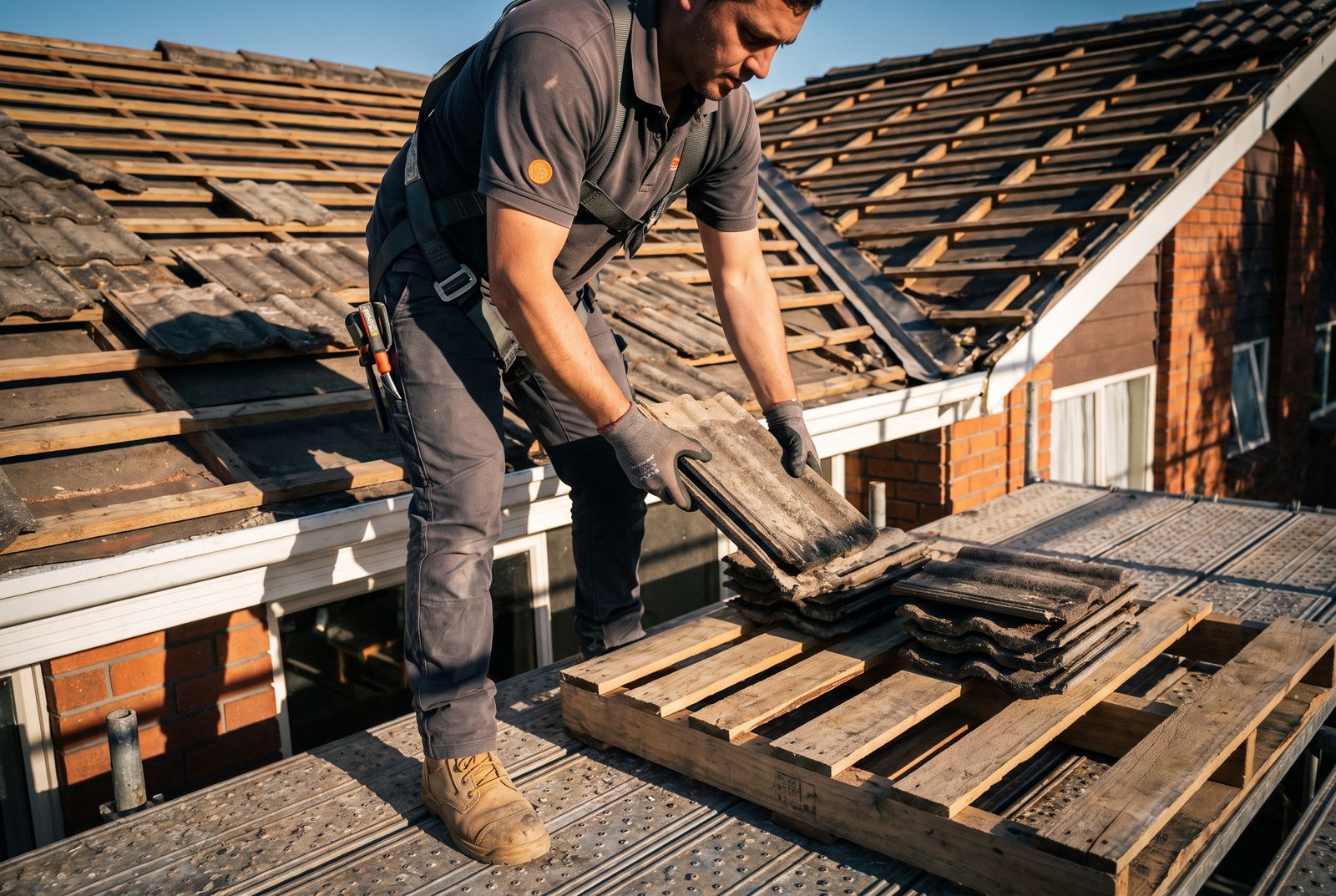
What the earthquakes taught Christchurch about heavy roofs
Older, heavier houses, mainly built before the 1970s with brick or block veneer and concrete tile roofs, suffered more structural damage in the February 2011 earthquake than newer, lighter houses. University of Canterbury researchers also found that falling brick chimneys often went straight through tile roofs, while those landing on corrugated steel more often caused no further damage.
A 2011 report from New Zealand science and engineering societies recommended replacing heavy roofs such as concrete tiles with lightweight materials such as steel. The Natural Hazards Commission's QuakeSafeHome guide still advises the same swap. A local example is Rangi Ruru Girls' School, which took 24 tonnes of heavy clay roofing off a building and replaced it with lightweight pressed metal tiles.
To be clear about what this does and does not mean: a lighter roof reduces the load the frame has to carry in an earthquake. It does not guarantee any particular outcome, and we never promise anything about your insurance.
Other reasons owners switch to steel
Weight is the headline, but it is not the only reason. A tiled roof has thousands of joins, and every cracked tile or tired ridge is a place for water to get in. Longrun steel usually runs from ridge to gutter in one length.
- Far less weight on the frame and foundations
- Far fewer joins and laps for rain to find
- No ridge bedding, pointing or slipped tiles to maintain
- A safer surface for future maintenance, walked with care
- A wide choice of COLORSTEEL colours and profiles
How It Works
Purlins, fixings and wind uplift
This is what separates a good tile to metal job from a poor one. A heavy tile roof mostly has to hold weight up. A light steel roof mostly has to resist the wind trying to lift it. BRANZ guidance on replacing concrete tile roofs makes the point that uplift becomes the main consideration, and that resistance depends on the connections from purlins to rafters, rafters or trusses to the top plate, and top plates to studs.
That matters in Canterbury, where the nor'wester can reach storm force. The closely spaced tile battens come off and new purlins go on at the spacing the steel profile needs, fixed for the wind zone shown for your site. Where the existing rafter connections are light, we add fixings. We work to NZS 3604 and the NZ Metal Roof and Wall Cladding Code of Practice.
Consent and the heritage check
Schedule 1 of the Building Act exempts replacing a component with a comparable one in the same position. Whether concrete tile to steel counts as comparable, and whether the framing work changes the answer, depends on the house. Structural work and complete or substantial replacement of a specified system fall outside that exemption, so we assess the roof structure and confirm with you, and with the council where needed, before quoting.
Christchurch adds a heritage step. Plan Change 13 revised the city's heritage rules and created Residential Heritage Areas, so we check whether your house is a scheduled heritage item or inside one of those areas before any change of roof material. Where consent is needed, the roofing is restricted building work done or supervised by a Licensed Building Practitioner, and the council issues the Code Compliance Certificate once it is signed off.
Noise, warmth, looks and price
Rain noise is the common worry. Steel laid over new underlay with good ceiling insulation is not the drum people expect, and if your insulation needs topping up before the next frosty winter, doing it while the roof is open is easy. Corrugate and trapezoidal profiles both suit brick and tile-era homes, and warmer colours sit well against brick. Browse the COLORSTEEL colours page and check a sample in daylight.
Tile removal adds labour and disposal compared with a steel to steel re-roof, and the new purlin layout adds timber and fixing time. Hipped tile roofs have more hips to flash than simple gables. Your quote shows tile removal and structural work as separate lines.
Why Choose Cheeky's Roofers for Tile to Metal Re-Roofing
Structure checked first
We look at the rafters and their connections before quoting, so the framing suits a light roof.
New purlins, not old battens
Tile battens come off and purlins go on at the spacing and fixing your wind zone needs.
Consent and heritage advice up front
You know whether the job is exempt, needs consent or needs a heritage check before work starts.
Tiles removed responsibly
Old tiles come off in an orderly way and leave site, with no rubble left behind.
Tile to Metal Re-Roofing FAQs
Why do so many Christchurch homeowners swap tiles for steel?
Because of the earthquakes. Engineering reports after 2011 recommended replacing heavy roofs such as concrete tile with lightweight steel, and the Natural Hazards Commission's QuakeSafeHome guide still gives that advice.
Will a steel roof make my house earthquake proof?
No roof can promise that. A lighter roof reduces the load on the frame during shaking, which is why it is recommended, but it is one part of how a house performs.
Do I need consent to change from tiles to steel?
It depends on the house and the structural work involved. We assess the roof and check heritage rules, then confirm whether it can go ahead as exempt work or needs consent.
Can the existing tile battens be reused?
Usually not. Tile battens are closely spaced for tiles, and steel needs purlins at a different spacing with fixings designed for wind uplift.
Is a steel roof noisy in the rain?
Not when it is laid over new underlay with decent ceiling insulation. Most owners notice little difference.
Is metal tile an option instead of longrun?
Yes. Pressed metal tiles keep a tiled look at a fraction of the weight. We can price both so you can compare.
Tile to Metal Re-Roofing Across Christchurch
We cover every region: Central Christchurch, North Christchurch, East and Coastal Christchurch, South Christchurch and Port Hills, West Christchurch, Selwyn and Waimakariri.
Related Roofing Services
- Re-Roofing
- Roof Replacement
- Asbestos Roof Replacement
- Decramastic Roof Replacement
- Roof Repairs
- Roof Painting
Tile to Metal Re-Roofing Guides
- Do You Need Building Consent to Re-Roof in Christchurch?
- Is Your Christchurch Roof Ready for Solar Panels?
- Heavy Tile Roofs and Earthquakes: What Christchurch Learned in 2011
See the roof replacement cost guide or every service we offer.
Sources and further reading
- Natural Hazards Commission: QuakeSafeHome guide
- eBOSS: Lightweight metal roofing recommended post-quake in Canterbury (citing engineering reports)
- Metal Roofing NZ: Canterbury earthquake roofing
- Metal Roofing NZ: Rangi Ruru Girls' School re-roof
- BRANZ Build 168 via MBIE Code Hub: Replacing a concrete or masonry tile roof
- BRANZ: Wind zones and NZS 3604
- MBIE building.govt.nz: Exemption 1, general repair, maintenance and replacement
- Christchurch City Council: Plan Change 13, heritage
- NZ Metal Roof and Wall Cladding Code of Practice