
Not every drip from the ceiling is a leak. In many homes the water comes from condensation forming on the underside of the roof on cold, clear nights. It soaks the insulation, stains the ceiling and feeds mould on the framing, and no amount of sealant on the roof will stop it, because the water is coming from inside.
We assess the roof space, find where the moisture is coming from, and fix the cause. That might mean adding vents, ducting a bathroom fan outside or improving airflow under the roofing. The best time to build ventilation in is during a re-roofing project, when the roof is already open, but most roofs can be improved without replacing them.
Pricing: every roof gets a free on-site measure and an itemised written quote, with a fixed price agreed before any work starts.
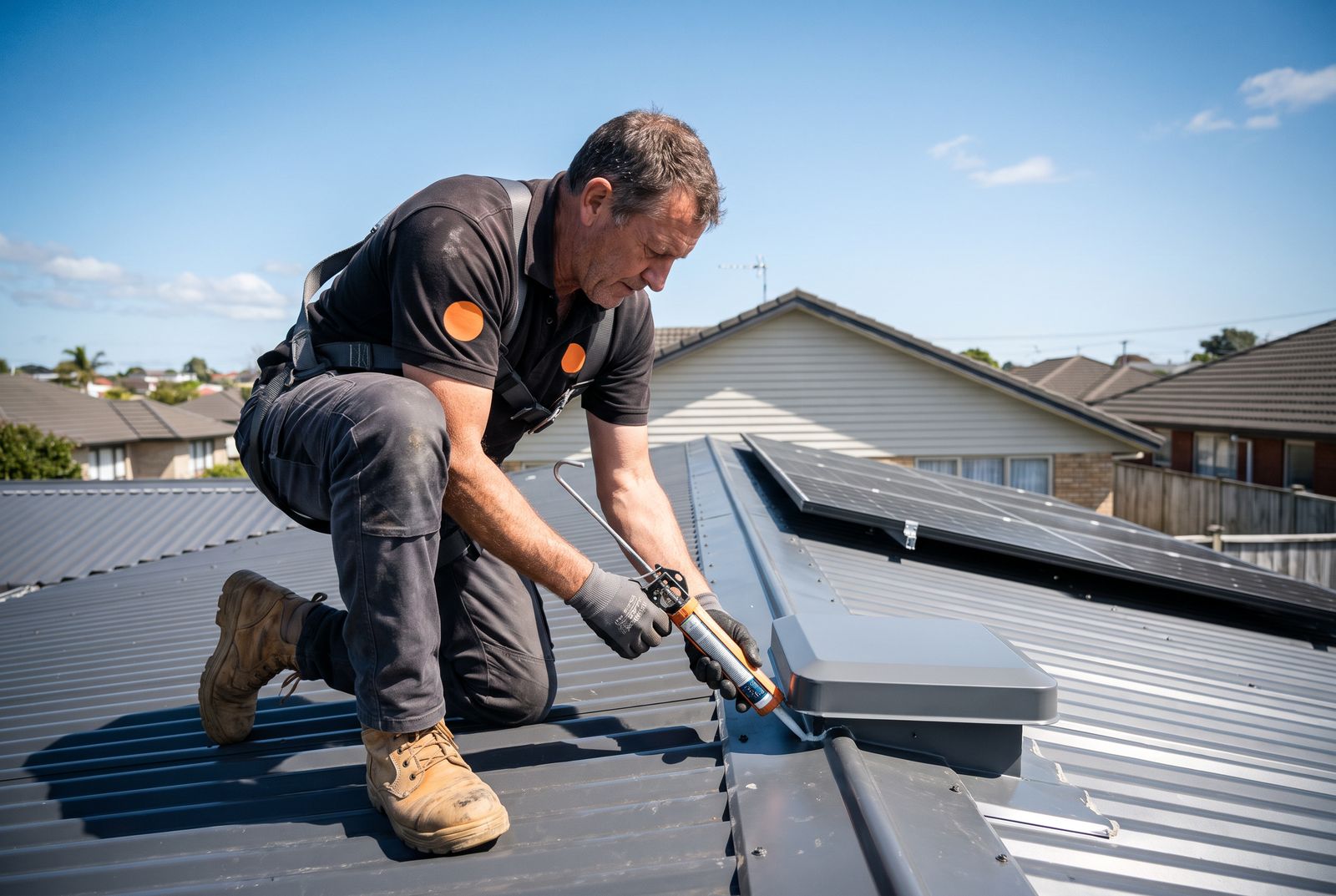
Signs your roof space needs ventilation
Condensation problems are usually worst on still, clear winter mornings and above bathrooms and kitchens. Common signs include:
- Droplets or rust spots on the underside of steel roofing or on nail points
- Damp, flattened or stained ceiling insulation with no obvious leak above
- Black mould on rafters, sarking or the back of ceiling linings
- A musty smell in the roof space or upstairs rooms
- Ceiling stains that appear in winter but not after heavy summer rain
- A roof space that gets extremely hot in summer, making upstairs rooms hard to keep cool
Why condensation forms under a roof
BRANZ explains that in a typical pitched roof, the space between the roofing and the ceiling insulation is effectively outside the insulated part of the house, so it cools to near the outdoor temperature overnight. Steel roofing also radiates heat to a clear night sky, so its underside can fall below the dew point of the air in the roof space. BRANZ research on underlays found that condensation on metal roofing tends to run down to the low points of the profile rather than drip straight off, and passes into the underlay where the two touch. That is one reason the state of the underlay matters.
The more moisture that rises into the roof space from the house, the bigger the problem. Unsealed downlights, ceiling hatches, bathroom fans that vent into the roof space and gaps around pipes all let moist air through. Ventilation removes the moisture that does get in, but cutting down what goes up matters just as much.
How It Works
Why Christchurch roofs are prone to it
Christchurch has exactly the kind of nights that BRANZ describes. The city averages around 80 ground frosts a year, and nights below freezing average about 50 a year at the airport. On those clear, still nights a steel roof loses heat fast and its underside gets cold enough for moisture in the roof space to condense. The results are most common in skillion and cathedral ceiling extensions, in homes where insulation has been pushed hard up against the roofing, and in older steel roofs with no underlay.
Winter living adds to it. Through cold spells houses stay shut up, and showers, cooking and washing dried indoors all add moisture that finds its way up through gaps in the ceiling into a cold roof space. Summer brings the opposite problem: the nor'wester can push Christchurch temperatures above 30 C, and an unvented roof space can get very hot. If you cannot tell whether you have a leak or condensation, a roof inspection will tell you which.
Ventilation options we install
The right option depends on the roof shape, pitch and cladding. Gable, hip and skillion roofs all move air differently, so we look at where air can come in low down and leave high up, and how the existing roofing and underlay will be affected. On a heavy tile roof that is due for replacement, it often makes sense to combine ventilation with a change to lightweight steel.
- Vented ridge or hip systems that let warm, moist air out at the highest point
- Eave and soffit vents that let drier outside air in low down
- Ventilated battens under steel roofing, often fitted during a re-roof
- Roof-mounted passive vents where ridge venting is not practical
- Bathroom and kitchen fans ducted outside instead of into the roof space
Building Code and product approvals
Building Code clause E3 Internal Moisture covers condensation and mould inside buildings. Earlier wording in its Acceptable Solution was widely read as discouraging ventilation of insulated roof spaces, and the New Zealand Metal Roofing Manufacturers association reports that wording has since been removed. BRANZ modelling found that ventilation helps clear excess moisture from roof spaces, while also noting that many New Zealand roofs perform well without it.
Vents that form part of the roof must suit the wind zone for your site, which is set on your consent plans, and must be installed so they do not create new leak paths. One BRANZ Appraisal for roof ventilation battens and vents, for example, covers profiled metal roofs up to Extra High wind zones and puts responsibility for detailing on the designer. We use appraised or manufacturer-specified products and follow their installation details. Adding vents to an existing roof is usually minor work, but we confirm the consent position with you before we start.
What affects the cost
A few vents on an easy roof is a modest job. A skillion roof with no cavity may need the roofing lifted to fit ventilated battens. Your quote reflects the roof type and access, the number and type of vents, whether roofing or underlay has to be lifted or replaced, fan ducting, and any repair to damaged insulation or ceilings. When ventilation is added during a re-roof, the extra cost is usually small because the roof is already open. If flashings or sheets around the vents need attention, our roof repairs team can fix them on the same visit. We assess roof spaces across the area, from Rangiora and Kaiapoi in the north to Rolleston, Lincoln and the Port Hills.
Why Choose Cheeky's Roofers for Roof Ventilation
Leak or condensation, diagnosed first
We find out where the water is coming from before recommending anything, so you do not pay to fix the wrong problem.
The whole moisture path
We look at how moist air gets into the roof space as well as how it gets out.
Products suited to your site
Vents are chosen for your wind zone and detailed so they do not become the next leak.
Built into re-roofs
When we re-roof, ventilation is part of the design, not an afterthought.
Roof Ventilation FAQs
How do I know if it is condensation or a leak?
Condensation is usually worst on cold, clear mornings and shows as droplets spread across the underside of the roofing. Leaks follow rain and show in particular spots. An inspection confirms which.
Does a steel roof cause condensation?
Steel cools quickly on clear nights, so condensation shows up on it first. The moisture comes from the house, which is why ventilation and stopping moist air getting into the roof space both matter.
Will roof vents let rain in?
Not when the right product is used and flashed correctly. We use vents suited to the roof profile and wind zone and follow the maker's details.
Should my bathroom fan vent into the roof space?
No. It should be ducted to the outside, otherwise it pushes moist air straight into the coldest part of the house.
Do I need more insulation instead?
Insulation keeps heat in the rooms but does not remove moisture from the roof space. Insulation pressed against the roofing can make condensation worse.
Can you add ventilation without re-roofing?
Usually, yes. Eave vents, roof vents and fan ducting can be added to most roofs. Ventilated battens are easiest to fit during a re-roof.
Roof Ventilation Across Christchurch
We cover every region: Central Christchurch, North Christchurch, East and Coastal Christchurch, South Christchurch and Port Hills, West Christchurch, Selwyn and Waimakariri.
Related Roofing Services
Roof Ventilation Guides
See the roof replacement cost guide or every service we offer.
Sources and further reading
- BRANZ: Cold roofs? Warm roofs?
- Build 120: Roofing underlay and moisture (BRANZ research)
- BRANZ: Passive roof ventilation
- BRANZ Appraisal 979: roof ventilation products
- NZ Metal Roofing Manufacturers: roof space ventilation and E3/AS1
- BRANZ: Wind zones and NZS 3604
- Wikipedia: Christchurch (climate)
- Te Ara: Canterbury region, the nor'wester