
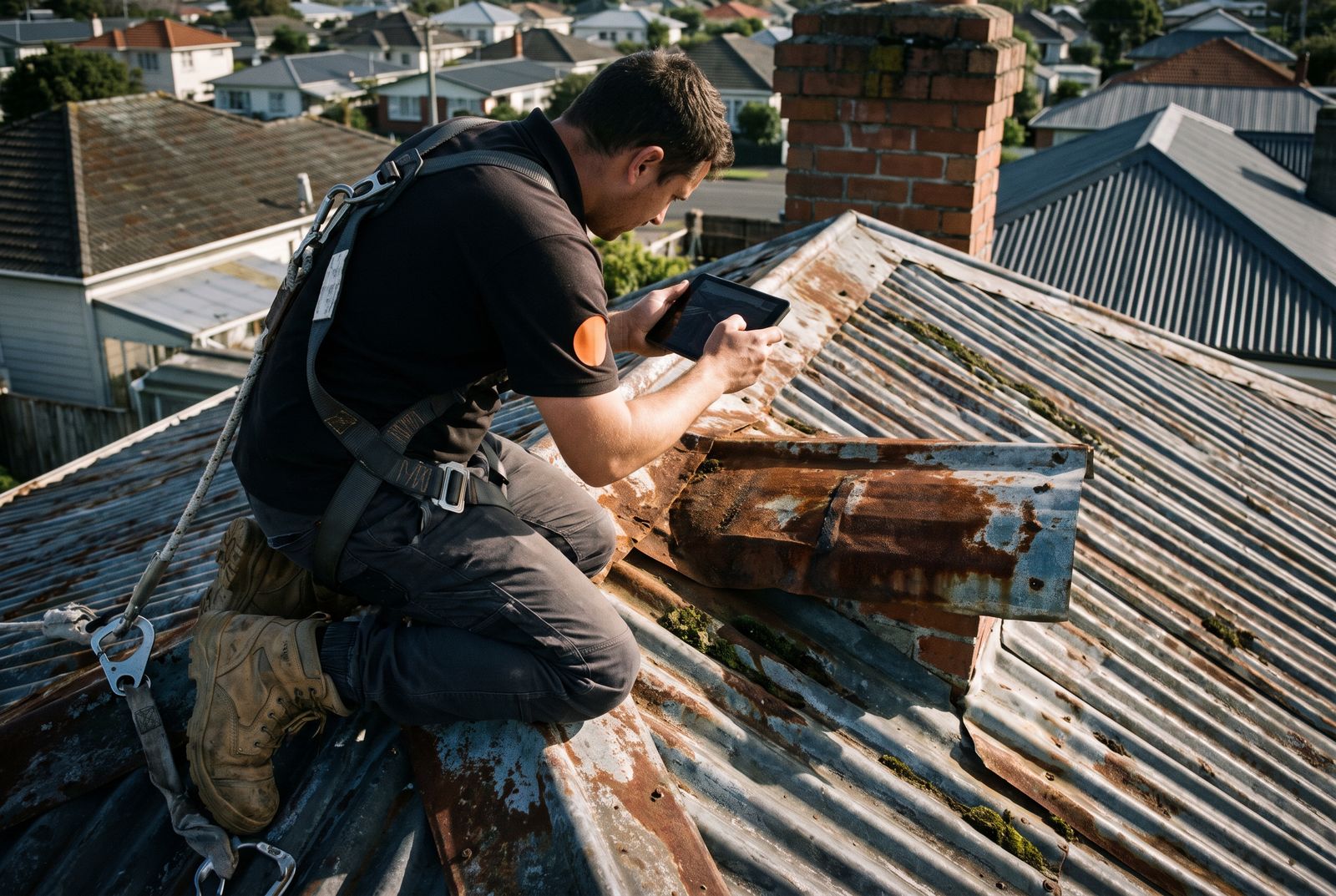
It is one of the most confusing roof problems because it looks exactly like a leak. Water marks appear on the ceiling, insulation goes damp, and sometimes drips land on the floor. Then you climb up after a downpour and the roof space is dry. The pattern only makes sense once you notice the timing: the water arrives after cold, clear nights, not after rain.
Christchurch gets a lot of those nights. This guide explains why condensation forms under steel roofs, how to tell it apart from a leak, what roofing underlay and ventilation actually do, and which fixes work without replacing the roof.
Why does condensation form under a metal roof on frosty nights?
Because the roofing gets colder than the air underneath it. BRANZ explains that in a typical pitched roof, the space above the ceiling insulation is effectively outside the warm part of the house, so it cools towards the outdoor temperature overnight. Steel roofing also radiates heat to a clear night sky, so its underside can drop below the dew point of the roof space air even when that air is above freezing.
Christchurch has the conditions for this in abundance. Climate normals for 1991 to 2020 show about 80 ground frost days a year, and around 50 nights a year below 0 C at the airport compared with about 23 in the city centre. Winter inversions, the same still, cold air that traps wood smoke over the city, mean many of those nights are calm and clear, which is exactly when a roof loses heat fastest.
The difference between the airport and the city centre is worth noticing. Homes further out on the open plains, towards the airport and in the outer towns, tend to see more frosty nights than the inner suburbs, so the same house design can behave differently depending on where it sits.
Is it condensation or a roof leak?
Timing and pattern usually give it away: condensation follows cold, clear nights and spreads widely, while a leak follows rain and shows up in particular spots. The two can also happen together, which is why it pays to check rather than guess.
If the clues point to a leak, the source is often well away from the stain on the ceiling, because water runs along framing and underlay before it drips. Our roof leak repairs team traces it back to where it gets in. If the clues point to condensation, sealing the roof will not help, because the water is coming from inside the house.
| Clue | Points to condensation | Points to a leak |
|---|---|---|
| When it appears | After cold, clear, still nights | During or after rain |
| Season | Mostly late autumn to early spring | Any time it rains, often worse in strong wind |
| Where | Spread across the roof, often above bathrooms and kitchens | Concentrated near flashings, penetrations, laps or valleys |
| Underside of the roofing | Fine droplets or rust spots over a wide area | Trails or staining from one entry point |
| Insulation | Damp in broad patches | Wet in a line or one area |
Where does the moisture in the roof space come from?
Almost all of it comes from the house below. Showers, cooking, breathing and washing dried indoors all put water vapour into the air, and warm air rises into the ceiling through any gap it can find. In a cold snap, when houses stay shut up for days, the amount builds quickly.
Common paths into the roof space include:
- Bathroom and kitchen fans that vent into the roof space instead of outside
- Older recessed downlights with open gaps around them
- Ceiling access hatches with no seal
- Gaps around pipes, flues and cables where they pass through the ceiling
- Portable LPG heaters without a flue, which add water vapour to the room as they burn
Leak or condensation? Find out for sure
Cheeky's Roofers checks the roof and the roof space, photographs what we find, and explains the fix in plain terms.
Does roof underlay stop condensation?
No, underlay does not stop condensation forming, but it manages the water once it does. BRANZ research on roofing underlays found that condensation on the underside of metal roofing tends to run down to the low points of the profile rather than drip straight off, and soaks into the underlay where the two touch. A sound underlay holds that moisture away from the insulation and lets it dry out during the day.
Problems show up when the underlay is missing, torn or sagging. Many older steel roofs were laid with no underlay at all, so condensation drips straight onto the insulation and ceiling. Underlay that has slumped onto the insulation, or insulation pushed hard up against the roofing, also lets water wick through. When the roof is being replaced, new underlay is part of the job, and re-roofing is the best moment to fix a roof space that has always been damp.
On concrete tile roofs the story is slightly different. Air moves through the gaps between tiles, so the roof space is often better ventilated, but the condition of the underlay still decides whether any moisture reaches the ceiling.
How does roof space ventilation help?
Ventilation carries moist air out of the roof space before it can condense. Air comes in low down, at the eaves or soffits, and leaves high up through a vented ridge or roof vents, so the roof space dries out instead of storing moisture night after night.
Building Code clause E3 Internal Moisture deals with condensation and mould. The New Zealand Metal Roofing Manufacturers association reports that earlier wording in its Acceptable Solution, which was widely read as discouraging ventilation of insulated roof spaces, has since been removed. BRANZ modelling found that ventilation helps clear excess moisture, while also noting that many roofs perform well without it. In other words, ventilation is a tool for roofs that have a problem, not a rule for every house.
Any vent set into the roof has to suit the profile and the wind zone for the site, and be flashed so it does not create a new leak. Our roof ventilation service uses products made for the roof in question and follows the maker's installation details.
Can roof condensation be fixed without a re-roof?
Usually, yes. Most roofs improve a great deal by cutting the moisture going up and helping the rest get out. Work through the cheapest steps first:
- Duct bathroom and kitchen fans to the outside, and run them long enough to clear the steam
- Seal the ceiling hatch and any gaps around pipes, cables and older downlights
- Pull back any insulation that is pressed against the underside of the roofing
- Dry washing outside or in a vented dryer during winter
- Add eave and high-level vents so air can move through the roof space
- Leave ventilated battens and new underlay for a re-roof, when the roofing is already off
Which Christchurch homes are most likely to drip?
Skillion and cathedral ceilings are the most common trouble spots, because there is little or no roof space for air to move through. Extensions with low-pitch roofs, older steel roofs with no underlay, and homes where bathrooms sit directly under the roof are close behind.
Heavy concrete tile roofs are common on older Christchurch houses, and converting one to steel changes how its roof space behaves. Steel sheets lose heat to a clear sky quickly, and the gaps between tiles that used to let air through are gone. Planning ventilation and new underlay as part of the conversion keeps the new roof space dry from the first winter.
When should you call a roofer about condensation?
Call when the ceiling is staining, the insulation is wet, or you can see mould on rafters or the back of the ceiling lining. Left alone, persistent damp can damage ceilings, rot timber and spoil insulation. Cheeky's Roofers inspects the roof space as well as the roof, tells you whether you have condensation, a leak or both, and recommends the simplest fix that will work.
We cover the whole city, including the western suburbs out towards the airport, where the climate records show far more sub-zero nights than the city centre. You can book online or call, and if the answer is better ventilation and a fan duct rather than new roofing, we will say so.
The short answer: frosty-morning drips are condensation from inside the house meeting a cold roof. Cut the moisture, ventilate the roof space and keep the underlay sound, and most ceilings stay dry all winter.
Frequently Asked Questions
Will a dehumidifier stop roof condensation?
It can help. A dehumidifier removes moisture from the air in the rooms, so less of it reaches the roof space. It works best alongside ducted extractor fans and sealed ceiling gaps. On its own it may not keep up in a house with several showers a day and washing dried inside.
Does more insulation cause condensation?
Insulation does not create moisture, but adding it can make the roof space colder, because less heat escapes upward. If moist air still leaks into that colder space, condensation can get worse. Insulation pressed against the roofing is a particular risk. Seal and ventilate when you top up insulation.
Is condensation damage covered by house insurance?
Policies usually treat gradual damage differently from sudden events, and condensation builds up over time. Check your own policy or ask your insurer. We cannot say what any policy will cover, but a written roof report can describe what is causing the problem.
Can condensation rot roof framing?
Yes, if it goes on for years. Repeated wetting of rafters, purlins and ceiling linings can lead to mould and decay, and it can rust the underside of steel roofing and its fixings. Catching it early is much cheaper than replacing timber or ceilings later.
Should I open windows in winter to stop condensation?
Opening windows for a short time after showers, cooking or drying washing lets moist air out before it rises into the ceiling. It is most useful combined with extractor fans that vent outside. Keeping rooms evenly heated also reduces condensation on windows and walls.
Do tile roofs get condensation too?
Less often, because air moves through the gaps between tiles. But a tile roof with damaged underlay, or a roof space full of moist air from unvented fans, can still drip. The same fixes apply: reduce moisture from below and keep the underlay in good condition.
Our Services
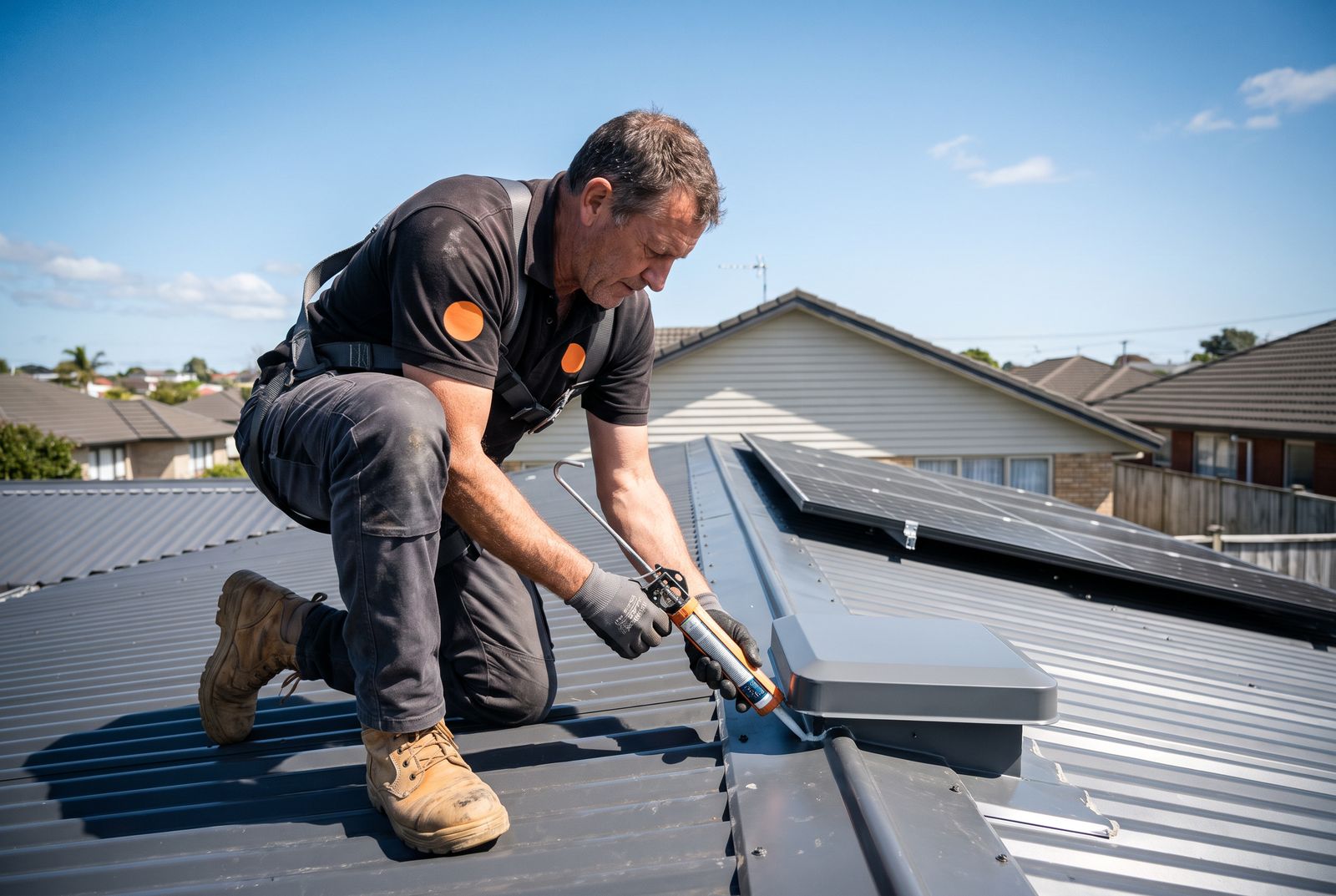 Roof VentilationRoof and ceiling space ventilation that reduces condensation, mould and heat build-up.
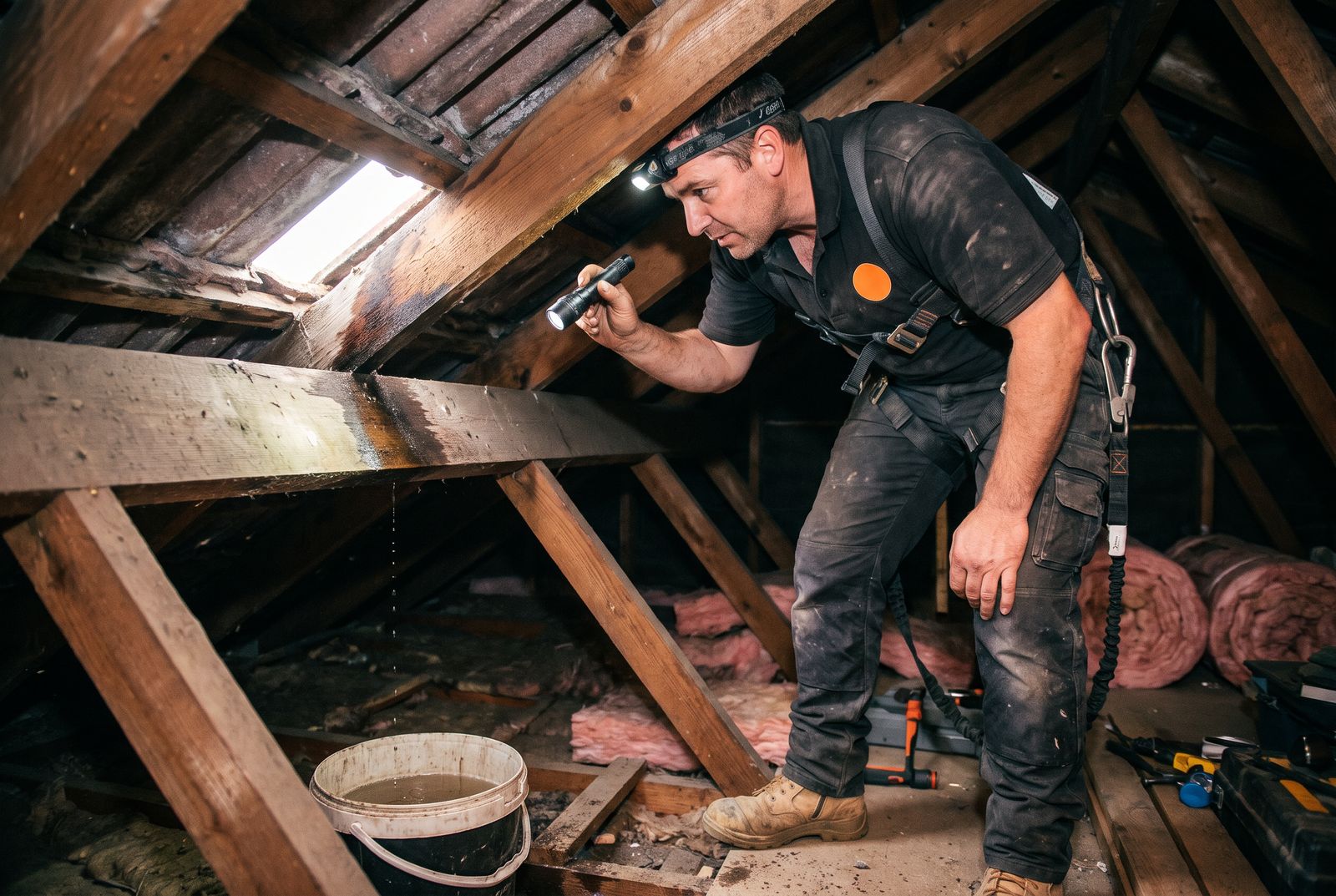 Roof Leak RepairsWe track a leak to its source, which is often nowhere near the stain on your ceiling, and fix the cause.
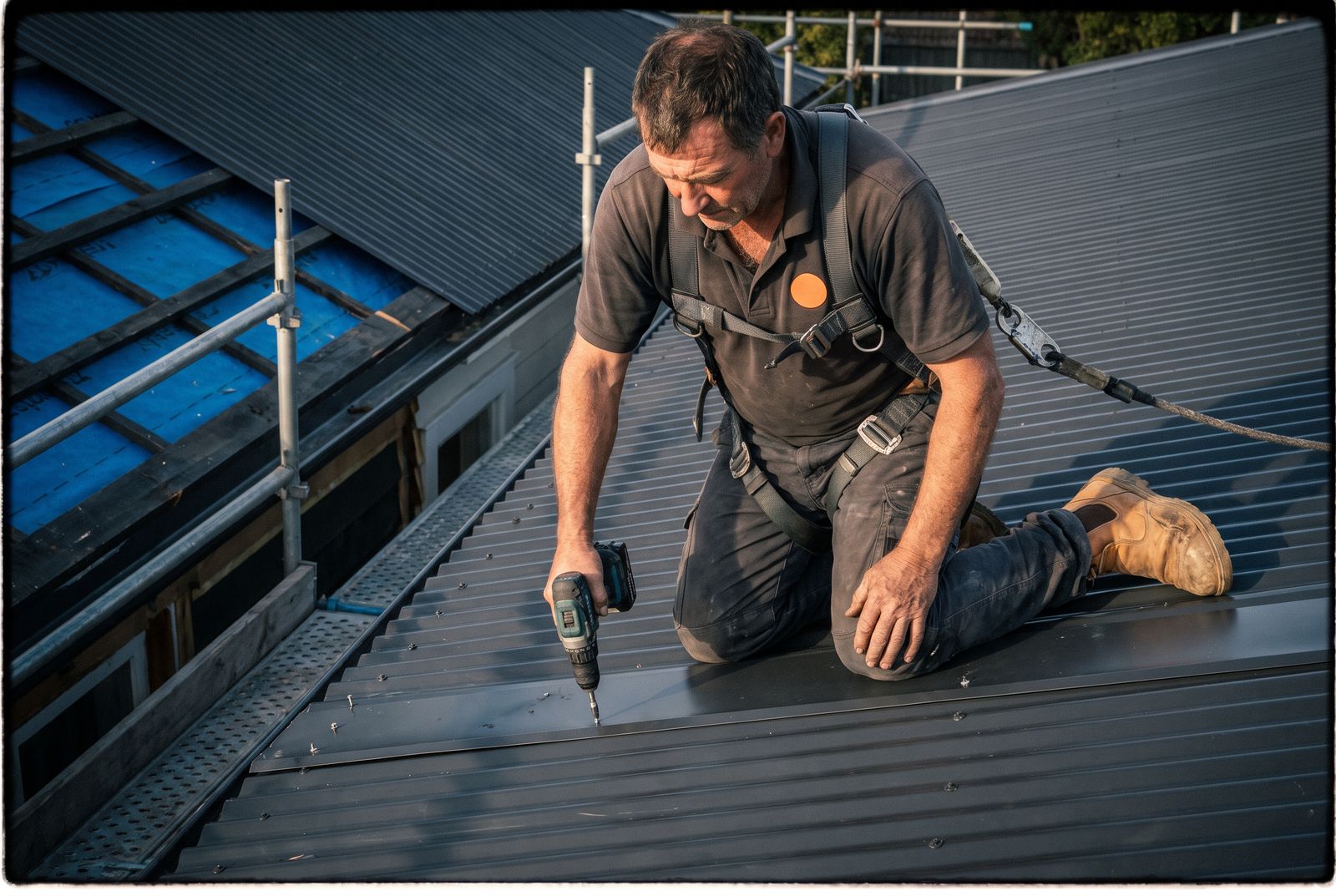 Re-RoofingA full re-roof replaces your old roofing, underlay and flashings with a new COLORSTEEL roof built to today's Building Code.
Read Next
Removing an Old Wood Burner Flue: Patching the Roof After Clean Air Changes
When an old wood burner comes out, the flue is lifted out through the roof and leaves a round hole and a flashing with n...
Read article
Is Your Christchurch Roof Ready for Solar Panels?
Most Christchurch roofs can carry solar panels, but the roof should be checked before the installer books in. Since 23 O...
Read article
Earthquake-Repaired Roofs in Christchurch: What to Check Before You Buy
Buying a Christchurch house with earthquake repairs is normal: the Canterbury Home Repair Programme alone repaired over ...
Read article