
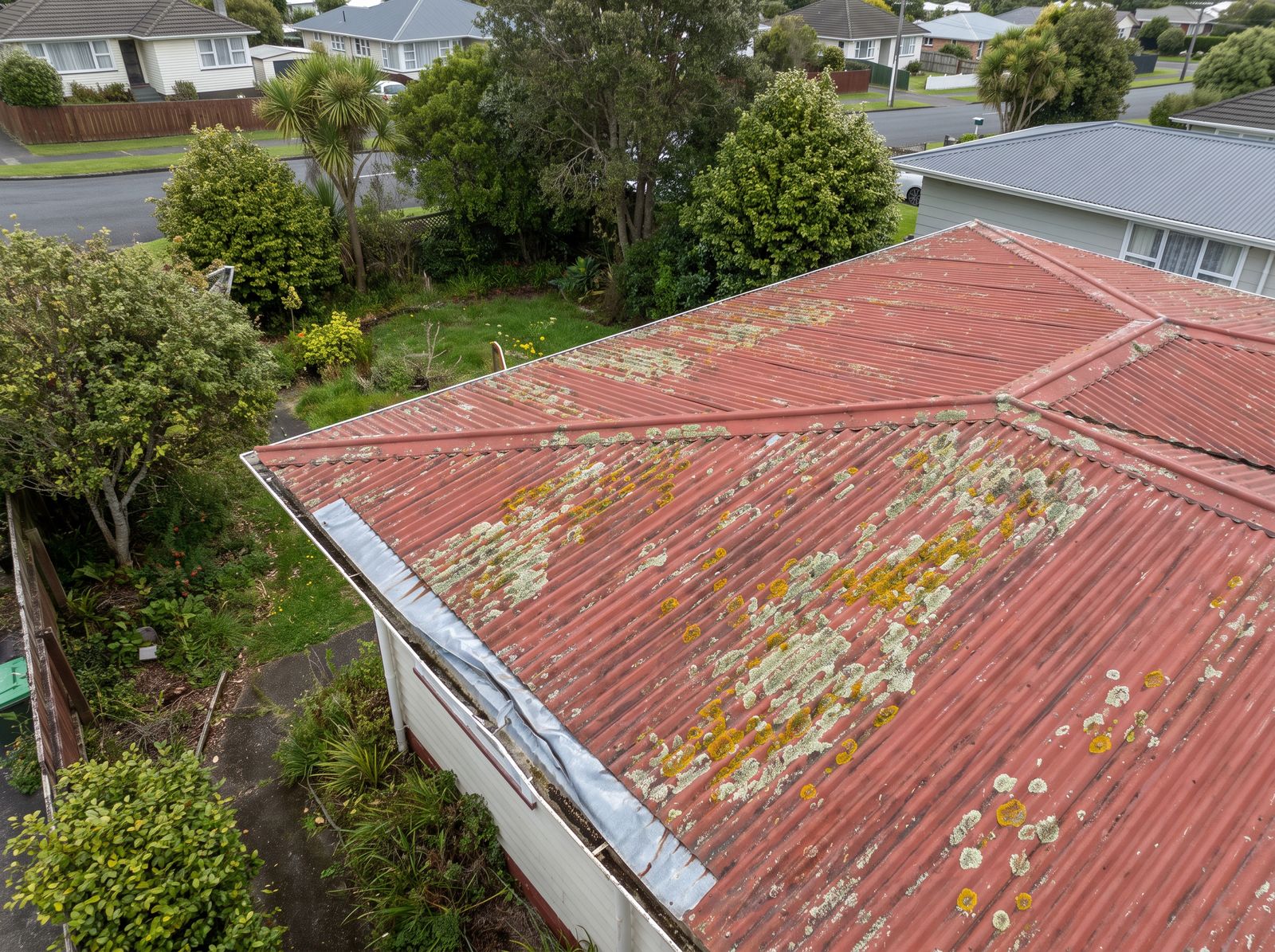
If you own a pre-1970s Christchurch house with concrete or clay tiles, you have probably wondered whether the roof is a liability in the next big shake. The honest answer is that a sound tile roof is not an emergency, but the evidence from 2010 and 2011 points clearly towards lighter roofing when the time comes to replace it.
This guide sets out what the engineering reports found, why roof weight matters, how a tile to metal conversion is done, and what it does and does not change for your insurance.
Why did heavy tile roofs do worse in the Canterbury earthquakes?
Heavy roofs did worse because weight at the top of a building increases the force the walls and frame must resist when the ground moves. Older, heavier houses, mainly built before the 1970s with brick or concrete block veneer and concrete tile roofs, suffered more structural damage in 2011 than newer, lighter houses, according to engineering reports summarised after the quakes.
Think of a house as an upside-down pendulum. The ground shakes the foundations sideways, and everything above has to follow. A tonne of tiles sitting on the rafters wants to keep going in the old direction, so the walls and bracing take a bigger load each time the ground reverses. A light steel roof asks far less of the same frame.
Chimneys made it worse. University of Canterbury researchers Buchanan and Newcombe found that brick chimneys falling onto corrugated steel often caused no further damage, while those landing on tile roofs more often broke straight through into the house. Two quakes did the testing: the Mw 7.1 Darfield earthquake on 4 September 2010, about 40 km west of the city, and the Mw 6.2 Christchurch earthquake near the Port Hills on 22 February 2011.
Is a metal roof safer in an earthquake?
A metal roof is lighter, so it reduces the seismic load on the house, which is why the post-quake advice favours it. In 2011 a report from New Zealand science and engineering societies recommended replacing heavy roofs such as concrete tiles with lightweight materials such as steel.
That advice has not gone away. The Natural Hazards Commission Toka Tū Ake (formerly EQC) QuakeSafeHome guide still suggests replacing heavy roofing such as concrete or slate tiles with lighter options such as corrugated iron or metal tiles. It sits alongside other measures in that guide, such as securing chimneys and checking foundations and subfloor bracing.
Safer does not mean earthquake proof. A lighter roof helps the frame, but the condition of the foundations, the bracing and any brick veneer still matter. On land classed TC2 under the Ministry of Business, Innovation and Employment (MBIE) technical categories, the guidance for new building says lightweight construction or enhanced foundations are likely to be needed, which shows how seriously weight is taken on Canterbury ground.
| Factor | Concrete or clay tile | Longrun steel |
|---|---|---|
| Weight on the frame | Heavy | Light |
| Falling chimney or debris (UC study) | More often broke through | Often no further damage |
| Pieces that can slip or crack | Every tile | Few, mostly laps and flashings |
| Post-quake guidance | Consider replacing | Recommended replacement material |
| Ongoing maintenance | Ridges, bedding, cracked tiles | Washing sheltered areas, checking fixings |
Should I replace my concrete or clay tile roof?
Replace it when the roof is near the end of its life or needs major work anyway, and treat earthquake weight as a strong reason to choose steel at that point. If the tiles are sound and well fixed, maintaining them is usually the better value in the short term.
Signs that a tile roof is due include cracked and slipped tiles that keep coming back, ridge bedding that keeps failing, brittle or missing underlay seen from the roof space, and leaks you cannot pin to a single tile. A good first step is a roof report: our roof inspections give you photos and an honest repair or replace view, so you can plan rather than react.
Some houses have an extra check. If the house is a scheduled heritage item or sits in a Residential Heritage Area under the Christchurch District Plan, check what applies with Christchurch City Council before changing the roof material. Plan Change 13 revised those heritage rules, so do not assume an older listing still holds or that none applies.
- Recurring cracked or slipped tiles after every windy spell
- Ridge capping that has been rebedded more than once
- Underlay that is torn, brittle or missing when seen from inside
- A chimney still standing on the roof
- Plans to renovate, add solar or insulate the ceiling
Thinking about a lighter roof?
Get a free measure and written quote for a tile to metal re-roof, with a repair price alongside if the tiles are still sound.
What does a tile to metal conversion involve?
A tile to metal conversion strips the tiles and battens, fixes new purlins at the spacing steel needs, lays new underlay, then installs longrun steel with new flashings and ridging. The roof shape stays the same, but almost everything you can see changes.
The order of work matters on an older house:
- Check the frame from the roof space for rot, sagging or past repairs
- Remove tiles and battens in sections so the house is never left open overnight
- Fix purlins to the rafters for the wind uplift the site needs
- Lay roofing underlay to manage condensation and wind-driven moisture
- Roll-form steel to length and fix it to the manufacturer's requirements
- Fold and fit flashings at walls, valleys, chimneys and penetrations
- Remove or cap a redundant chimney while the roof is open
How much weight can a re-roof take off a house?
It depends on the tile, the roof area and the steel chosen, but the difference is large enough that engineers singled it out after 2011. A well-known Christchurch example is Rangi Ruru Girls' School, which removed 24 tonnes of heavy clay roofing and replaced it with lightweight pressed metal tiles.
We do not quote a weight saving for your house before we have measured it, because tile types and roof areas vary. What we can tell you after a measure is the roof area, the existing material and a written price. If you prefer the look of tiles, pressed metal tiles are an option that keeps a tiled appearance at a fraction of the weight.
Removing weight also makes the next job easier. Insulating the ceiling, adding a skylight or fitting solar panels is simpler on a steel roof that can be walked on with care, and there are no brittle tiles to crack underfoot.
Does a lighter roof change my insurance?
It may or may not; only your insurer can say, so ask them before you decide rather than assuming a new roof will change your premium or cover. We do not make promises about insurance outcomes.
What is useful to know: on 1 July 2024 the Earthquake Commission became the Natural Hazards Commission Toka Tū Ake (formerly EQC), EQCover became NHCover, and the building cap rose to $300,000 plus GST per dwelling per event. Your private insurer covers the rest under your policy. Tell your insurer about a re-roof once it is finished, and keep the invoice, product details and any photos in case they ask.
If you are buying a house that was repaired after the quakes, a roof check before you sign is worth more than any assumption. Repaired homes are common in Christchurch and most repairs were straightforward, but a roof report tells you what you are actually buying.
When should you call a roofer about a tile roof in Christchurch?
Call a roofer when tiles are cracking or slipping, when a leak appears, or when you are planning a renovation and want a lighter roof included. At Cheeky's Roofers we inspect the roof, the frame we can see and any chimney, then give you a tile repair price and a full re-roofing price side by side.
Older heavy homes are spread across the city, from the inner suburbs to the east, where the ground damage in 2010 and 2011 was worst and many homes were repaired or rebuilt. Our page for roofers in East and Coastal Christchurch explains what we check near the sea. If you are weighing up the chimney first, read our guide to chimney removal in Christchurch.
Summary
Heavy tile roofs added load and chimney risk in the Canterbury earthquakes, and both the 2011 engineering advice and the Natural Hazards Commission favour lightweight roofing. If your tiles are sound, maintain them; when they are due, a steel re-roof takes weight off the frame. Book a free measure and Cheeky's Roofers will give you a written quote.
Frequently Asked Questions
Can steel go straight over the old tiles?
No. The tiles and battens come off first, because steel needs purlins at a different spacing and new underlay underneath. Laying steel over tiles would keep all the weight you are trying to remove and hide any rot or damage in the frame.
Will a steel roof be noisy in the rain?
Rain is more audible on steel than on tiles, but underlay and ceiling insulation reduce it a lot. Most people notice it in heavy rain only. Christchurch is fairly dry by New Zealand standards, with about 618 mm of rain a year at the airport.
Are pressed metal tiles as light as longrun steel?
Pressed metal tiles are far lighter than concrete or clay tiles, which is why Rangi Ruru Girls' School chose them. They keep a tiled look on houses where that matters, such as some heritage settings, but they have more joins than longrun sheets.
Do I need an engineer for a tile to metal re-roof?
Usually not for a straightforward replacement on a sound frame. If the frame is damaged, the roof shape is changing, or the house is on TC3 land with repair work involved, an engineer may need to be part of the job. We will tell you if we think one is needed.
What happens to the old tiles?
Concrete tiles are heavy waste and go to an appropriate disposal or recycling site. Removal and disposal are included as a line in our written quote, so you can see the cost rather than finding it later.
Our Services
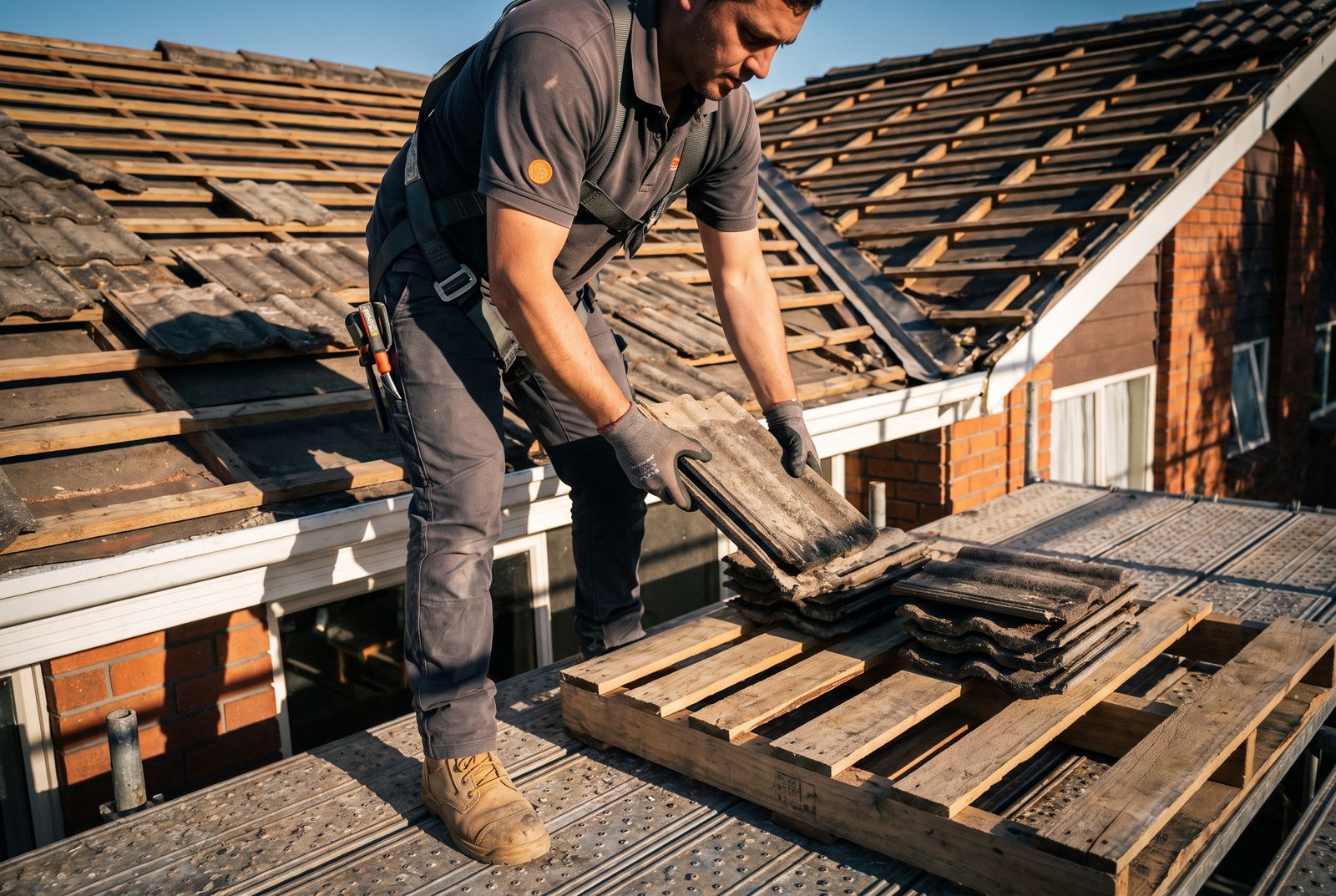 Tile to Metal Re-RoofingSwapping heavy concrete tiles for lightweight steel removes weight from the frame and ends the cycle of cracked tiles and leaks.
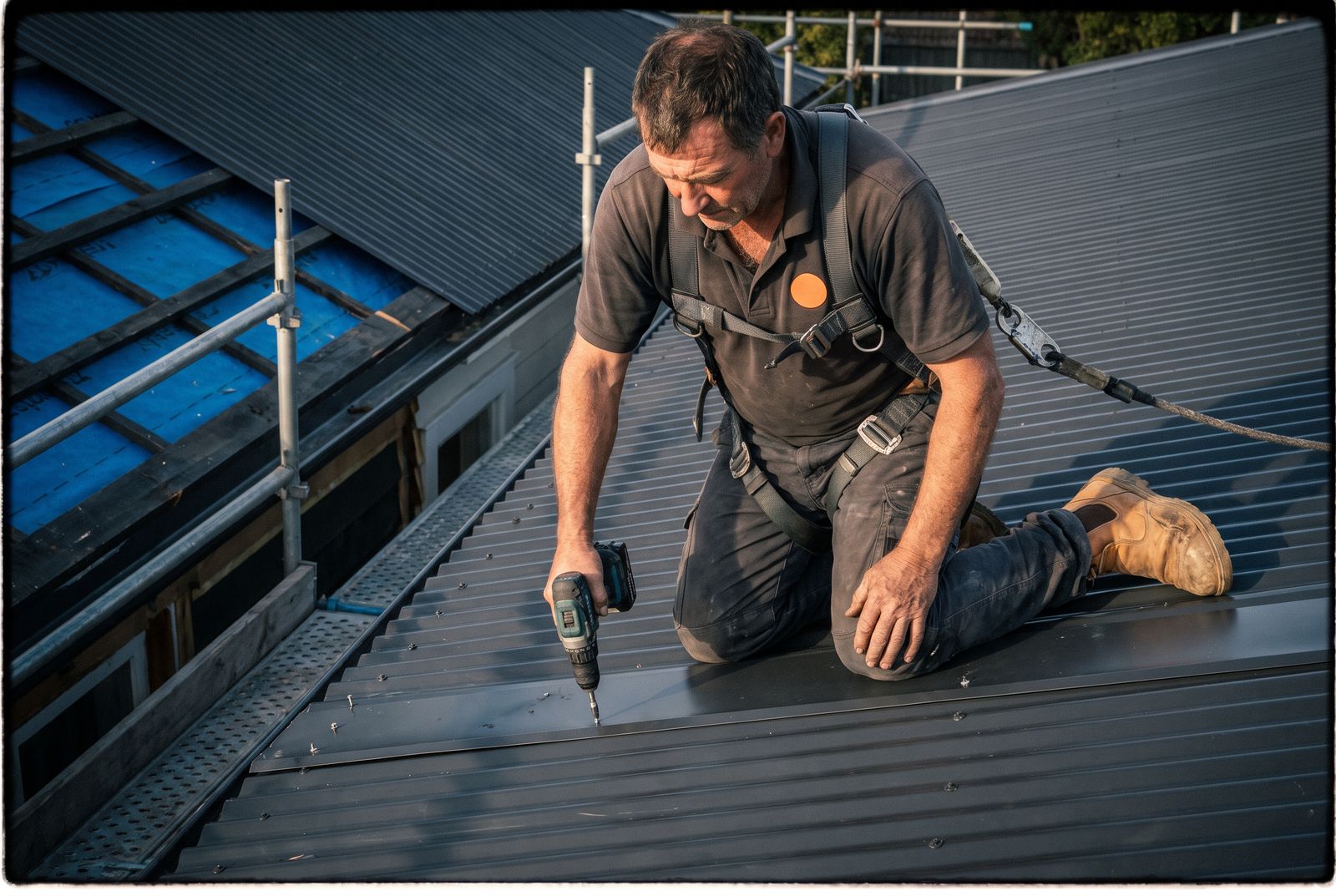 Re-RoofingA full re-roof replaces your old roofing, underlay and flashings with a new COLORSTEEL roof built to today's Building Code.
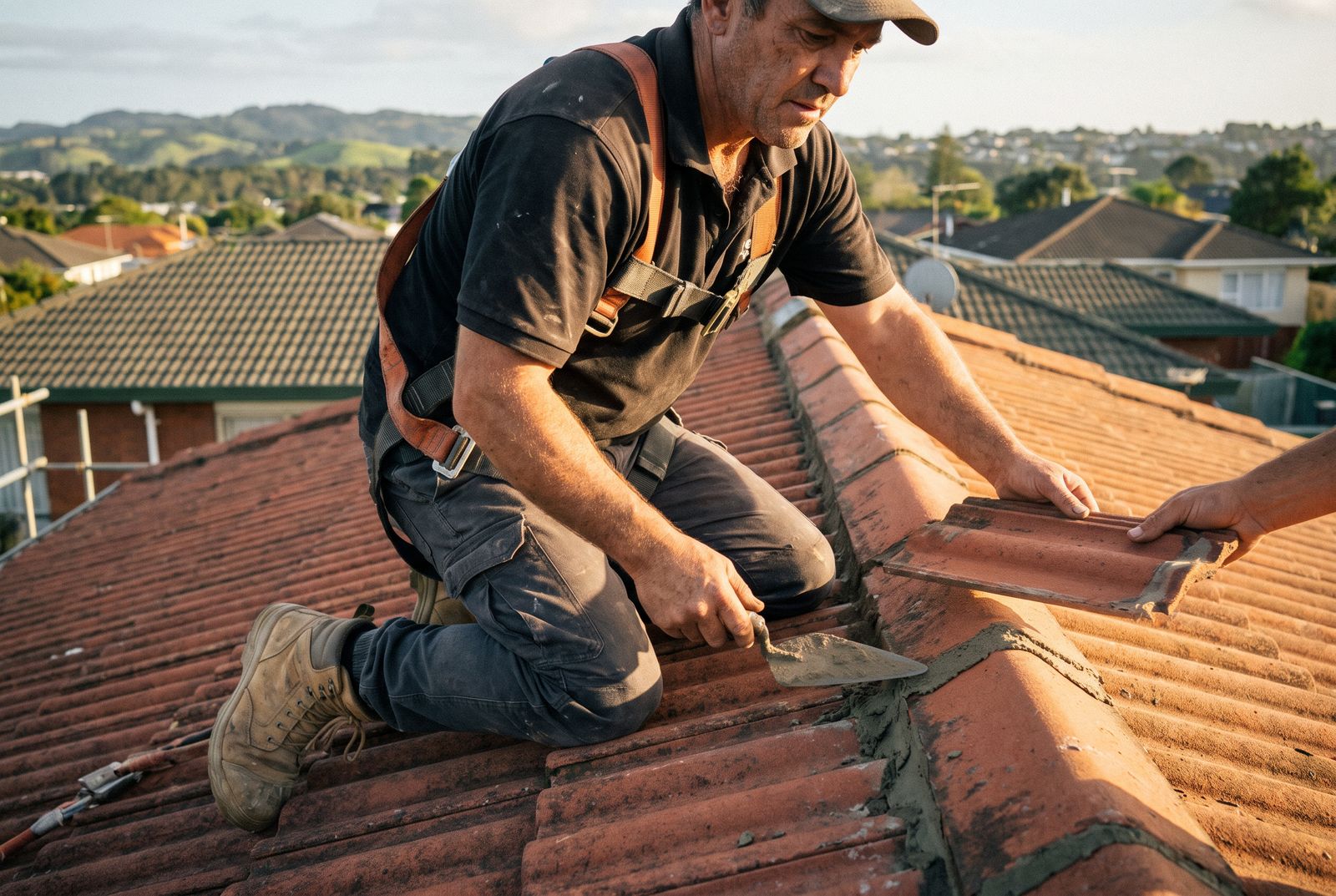 Tile Roof RepairsCracked and slipped tiles replaced, ridges rebedded and repointed, and leaks under tiles traced and sealed.
Read Next
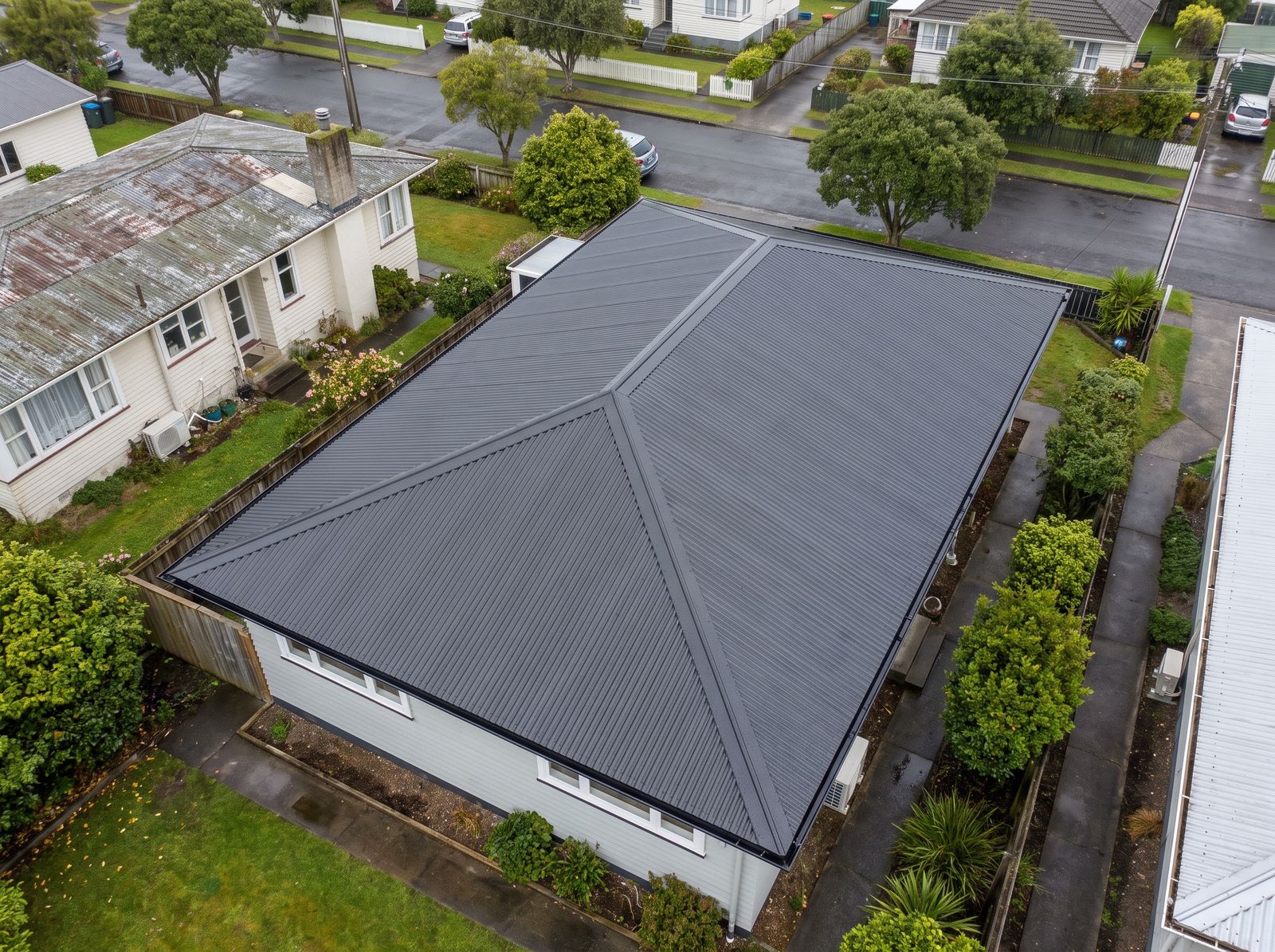
Removing a Chimney in Christchurch: Consent, Roof Patching and Safety
Most Christchurch homeowners can remove a brick chimney without building consent, as long as the building is no more tha...
Read article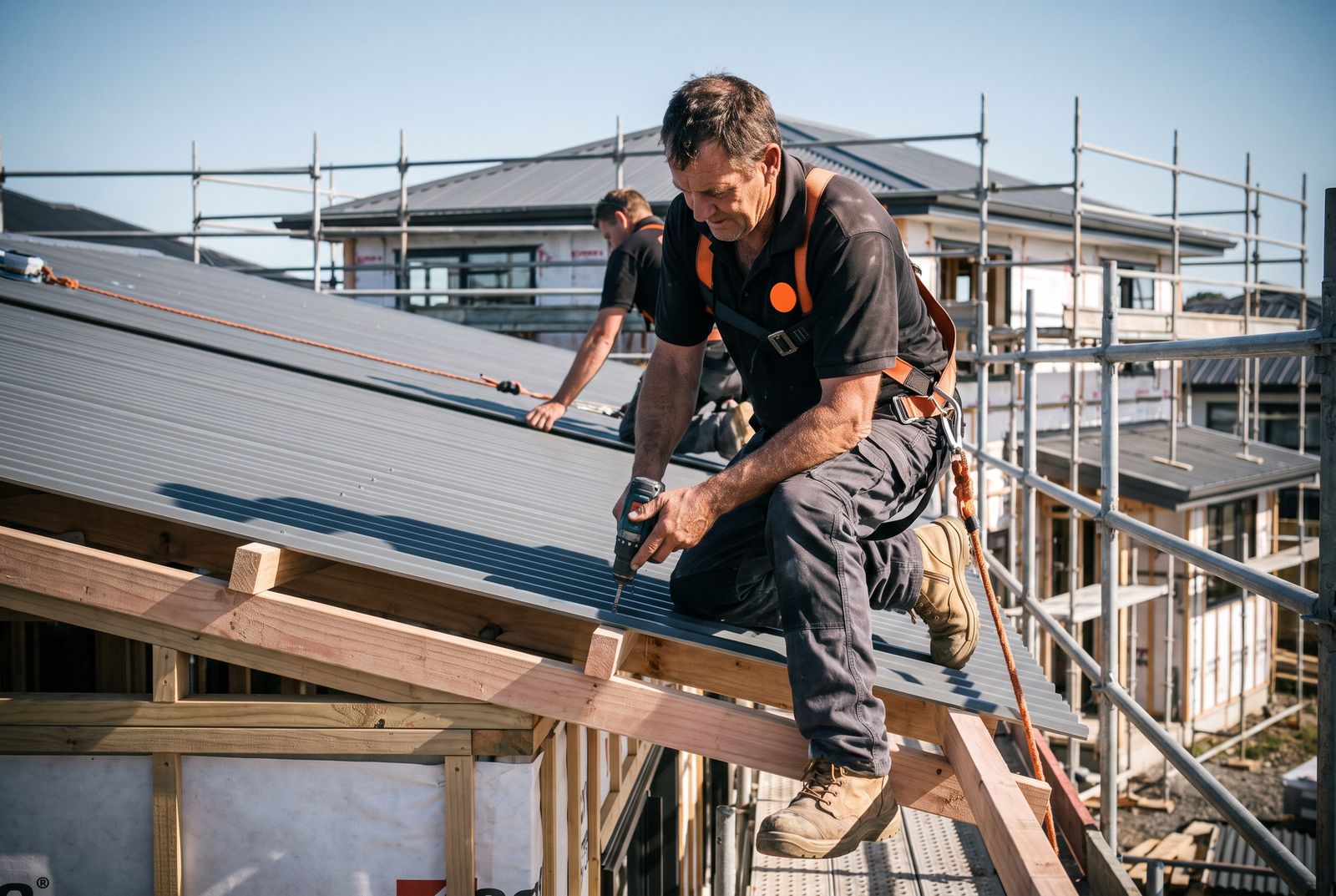
Choosing a COLORSTEEL Colour for a Christchurch Roof: Heat, Frost and Covenants
The best COLORSTEEL colour for a Christchurch roof is one that suits the house, passes any covenant or heritage check, a...
Read article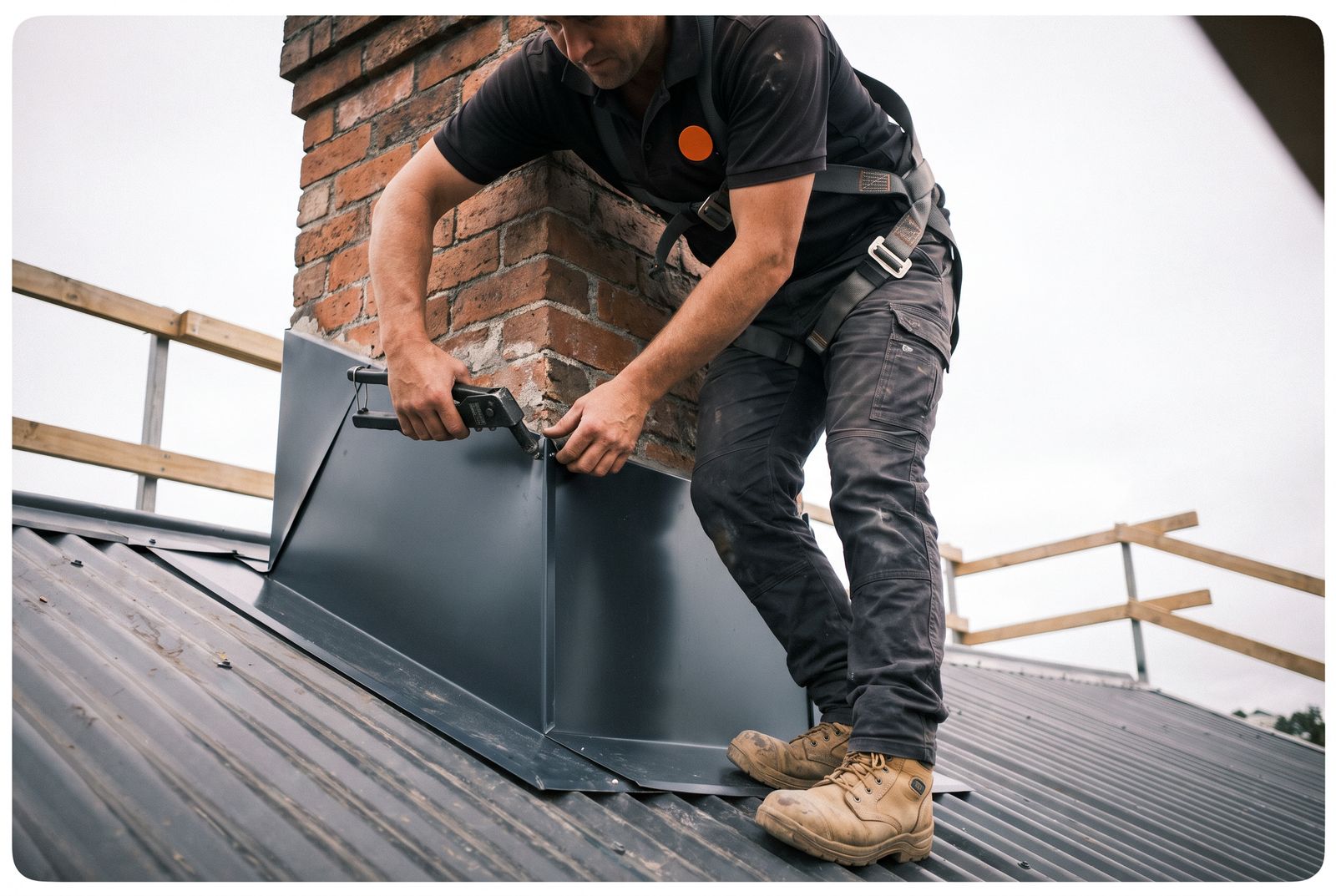
Nor'wester Roof Damage: What to Check After a Canterbury Windstorm
After a strong nor'wester, check from the ground for lifted or missing roofing sheets, loose ridging and barge flashings...
Read articleSources
- Natural Hazards Commission: QuakeSafeHome guide
- eBOSS: Lightweight metal roofing recommended post-quake in Canterbury (citing engineering reports)
- Metal Roofing NZ: Rangi Ruru Girls' School re-roof
- MBIE building.govt.nz: Repairing and rebuilding houses affected by the Canterbury earthquakes
- Christchurch City Council: Plan Change 13, heritage