
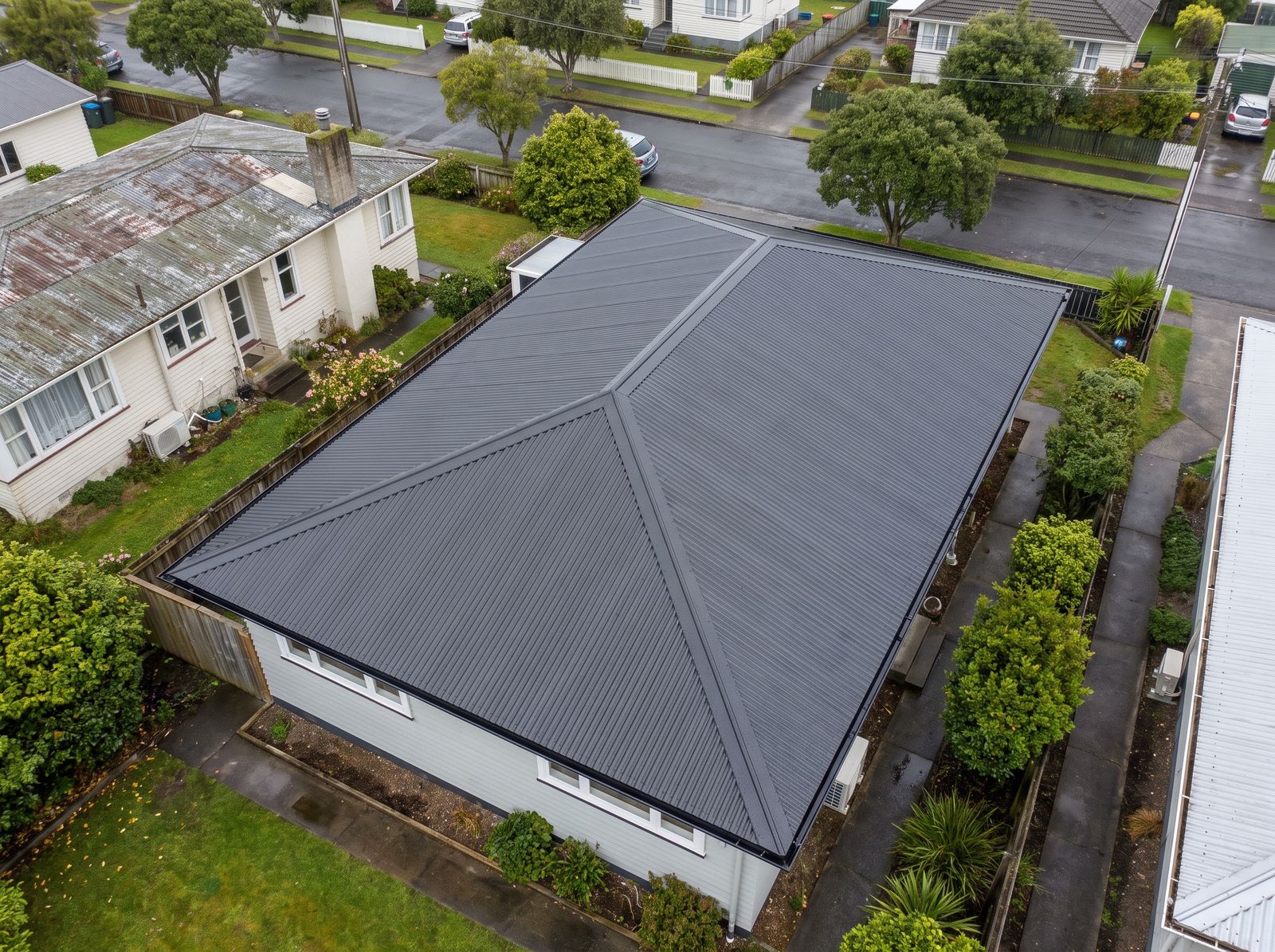
Brick chimneys were one of the most visible failures in the Canterbury earthquakes, and many that survived are no longer used because open fires are banned in the city. If yours is still standing, removing it takes weight off the roof, ends a common source of leaks and removes a hazard in the next big shake.
This guide explains the consent rules, the difference between removing the whole chimney and just the top, what happens to the roof afterwards and how a wood burner flue fits in.
Do I need building consent to remove a chimney?
Usually not. MBIE's Canterbury residential guidance says demolishing a chimney does not need a building consent if the building is no more than three storeys and the work does not affect the primary structure, a specified system or fire separation.
Those three conditions are where care is needed. A chimney built into a load-bearing wall, one shared between two attached homes, or one that forms part of a fire separation between units may fall outside the exemption. If you are not sure, ask Christchurch City Council, Selwyn District Council or Waimakariri District Council, depending on where you live, before work starts. Their answer costs far less than fixing work done on the wrong assumption.
Heritage is a separate check. Christchurch City Council's heritage guidance notes that after the 2010 earthquake chimneys were sometimes demolished to floor level, and that on heritage buildings chimneys should be reconstructed where possible. If your home is a scheduled heritage item or in a Residential Heritage Area, talk to the council before anything comes down.
Why have so many Christchurch chimneys already gone?
Many went in the 2010 and 2011 earthquakes, either by falling or by being taken down as unsafe afterwards.
Unreinforced brick stacks are tall, heavy and stiff, and they sit on top of a house that moves. In a strong shake the part above the roof whips back and forth with nothing to hold it, which is why it so often snapped at the roofline. University of Canterbury research found falling chimneys more often broke through tile roofs than steel ones, which made the damage worse on heavy-roofed houses.
Clean air rules removed the other reason to keep them. Environment Canterbury banned open fires in the city in 2006, and in the Christchurch Clean Air Zone open fires and older-style burners cannot be used on sites under two hectares. For many homes, the chimney serves nothing at all.
Can I remove just the part above the roofline?
Yes, removing the stack down to below the roofline is common, and it deals with the most hazardous part. The Natural Hazards Commission Toka Tū Ake (formerly EQC) identifies the section above the roofline as the most dangerous part of a chimney.
Removing only the top leaves the lower chimney and the firebox in the house. That is often fine, but the remaining brickwork is still heavy, and it still needs to be secured. Full removal to the foundations takes all the weight out and frees up floor space, but it involves inside work, flooring and wall linings, and the base may be part of the subfloor.
The roofing side is similar either way: once the stack is gone below the roof, the opening is framed, underlay is laid and the roof is closed in. The choice usually comes down to budget, disruption and what you want to do with the room.
Is your chimney still standing?
We will inspect the chimney and its flashings and give you a written quote to remove it and close in the roof.
What happens to the roof where the chimney was?
The hole is framed in, covered with underlay and roofed over so it is weathertight, and the old chimney flashings are removed. How it is finished depends on the roofing material.
Chimney flashings are one of the most common sources of roof leaks on older houses, so removing the chimney often ends a long-running problem. Done badly, though, the patch becomes the new leak. The key is to keep water running from ridge to gutter without new laps or gaps in the path.
| Roof type | Usual approach after removal |
|---|---|
| Longrun steel | Replace the affected sheets with full-length sheets so there are no short laps in the water path |
| Concrete tile | Fit matching tiles over new battens and underlay; source tiles before the chimney comes down |
| Decramastic or pressed metal tile | Fit matching tiles or panels where available; poor matches may point to a re-roof |
| Roof due for replacement | Remove the chimney as part of a full re-roof, which avoids a patch altogether |
How does removing a chimney affect a wood burner flue?
If your wood burner's flue runs up inside the chimney, removing the chimney means the flue needs its own route through the roof, with its own flashing, or the burner comes out. Plan the two together.
In the Christchurch Clean Air Zone, on sites under two hectares, only ultra-low emission burners can be installed, and existing low-emission burners can be used for up to 20 years from installation. If your burner is near that point, it may make sense to retire it and the chimney in one job. Environment Canterbury's Solid Fuel Burner Database shows a burner's age and replacement date.
Where a flue stays, the new roof penetration is sealed with a flashing that suits the roofing profile and allows the flue to expand with heat. Flue installation itself is work for a qualified installer, while the roof opening and flashing are ours.
Is chimney removal a DIY job?
No. Removing a brick chimney means working at height with heavy, loose material above a roof that may not take the weight of fallen bricks. WorkSafe expects edge protection and safe access for roof work, and bricks must come down by hand in a controlled way, never pushed over.
The brick dust, the old mortar and the soot inside the flue are all messy, and the roof must be made weathertight the same day. A roofer can plan the removal and the patch as one job so the house is never left open to a southerly.
- Scaffold or edge protection set up before work starts
- Bricks lowered by hand or chute, not dropped onto the roof
- Roof opening covered the same day
- Flue and fireplace made safe inside the house
- Old flashings and fixings removed, not left to rust
When should you call a roofer about a chimney in Christchurch?
Call a roofer if your chimney has cracked mortar, loose bricks, a lean, or leaks around its flashing, or if you are planning a re-roof. Cheeky's Roofers can remove the stack, close the roof and handle the flashing work, and we can include chimney removal in a full re-roofing job so there is no patch at all.
If you only need the leak fixed for now, our roof flashing repairs page explains what we do around chimneys and other penetrations. Heavy tile roofs and chimneys are often found together on older houses, so read our guide to heavy tile roofs and earthquakes if both apply. Heritage checks matter most in the older inner suburbs; our page for roofers in Central Christchurch covers them.
Summary
Most chimney removals in Christchurch do not need building consent, but check the structure, fire separation and heritage conditions first. Removing the stack above the roofline deals with the biggest hazard, and the roof must be closed in properly. Book a free roof inspection and we will tell you what your chimney needs.
Frequently Asked Questions
Does a fallen or removed chimney affect a house sale?
Buyers and their inspectors will ask how the opening was closed in and whether a leak followed. Keep the invoice and photos of the work. If consent was not needed because the exemption applied, a short note explaining that helps answer questions.
Can I keep the fireplace for looks after the chimney is removed?
Yes, if only the stack above the roofline comes off, the fireplace surround can stay as a feature. The flue must be capped and the fireplace closed off so it cannot be used, because without the chimney it has nowhere safe to vent.
What happens to the bricks?
Clean bricks can sometimes be reused for garden walls or paths. Others go to a disposal site. Old bricks are heavy, so the quote should include how they come down and how they leave the site.
Will removing the chimney make the house colder?
Not usually. An unused open chimney lets warm air escape up the flue, so closing it often reduces draughts. If the fireplace was your main heating, plan a replacement heat source before winter.
Do I need an engineer to remove a chimney?
Not for a straightforward stack above the roofline. If the chimney is part of a load-bearing wall, braces part of the house, or the work affects fire separation between homes, get advice from an engineer and check consent with the council first.
Our Services
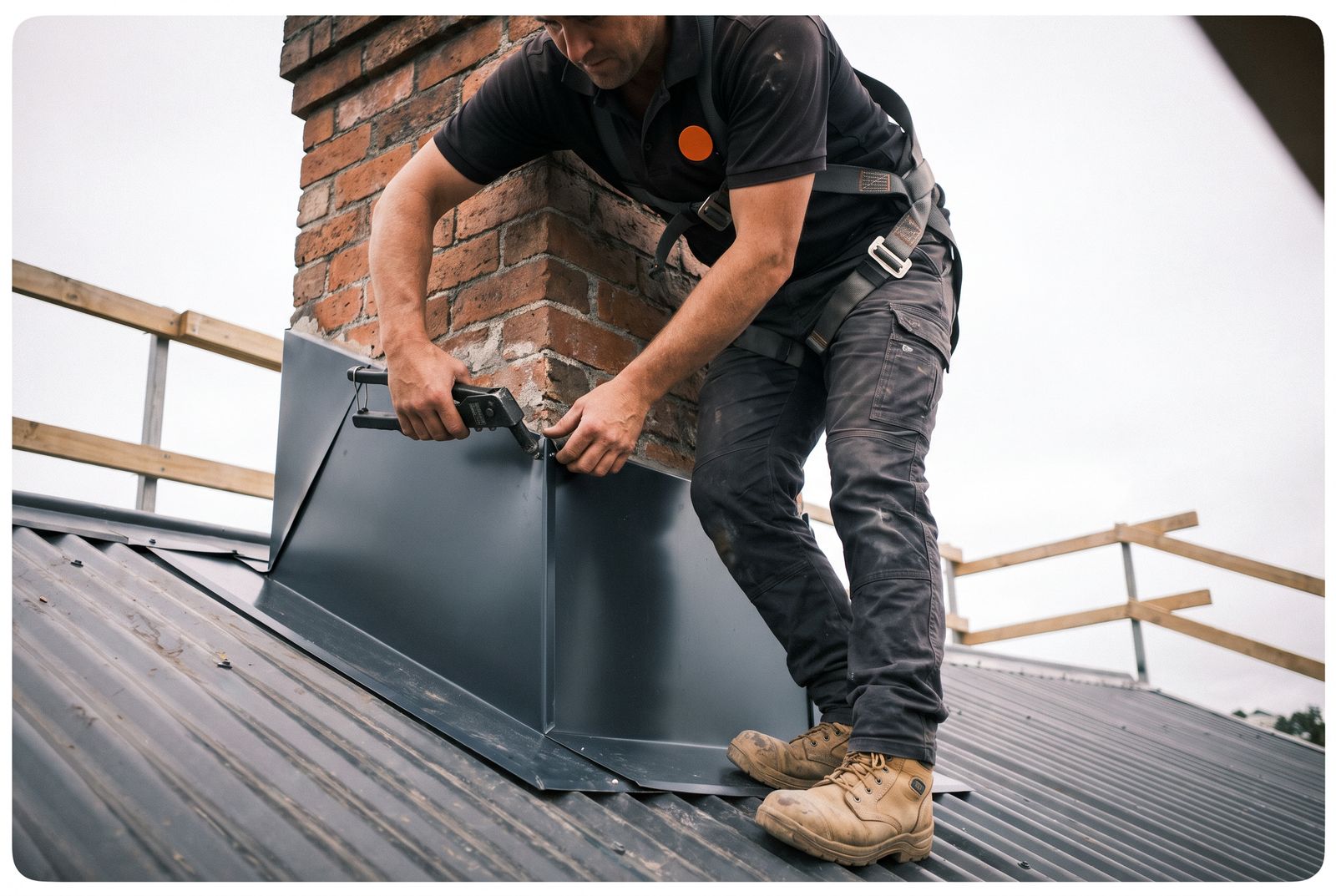 Roof FlashingFlashings around chimneys, skylights, walls and valleys cause most leaks.
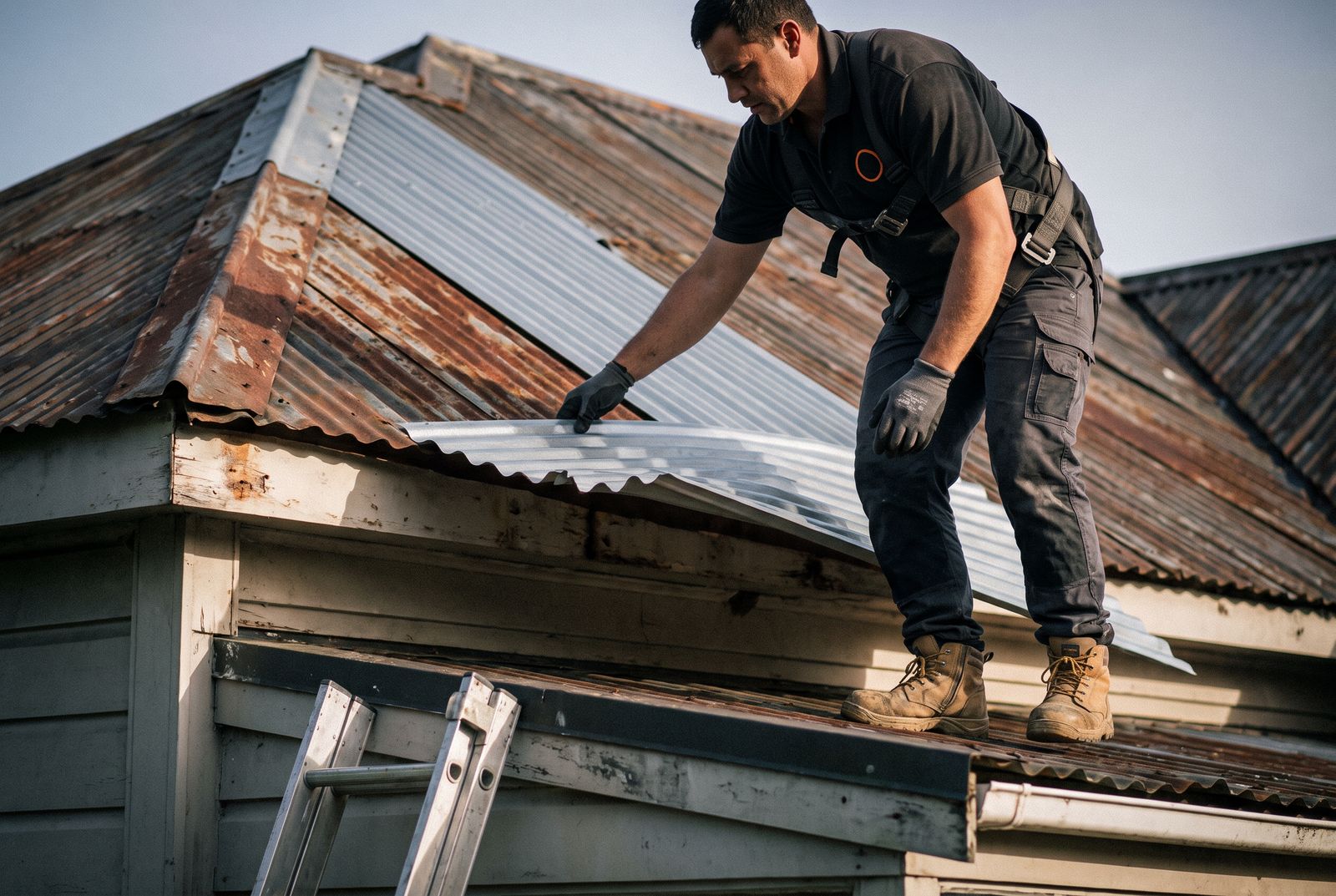 Roof RepairsLeaks, loose sheets, failed flashings and cracked tiles repaired properly, with photos of what we found and fixed.
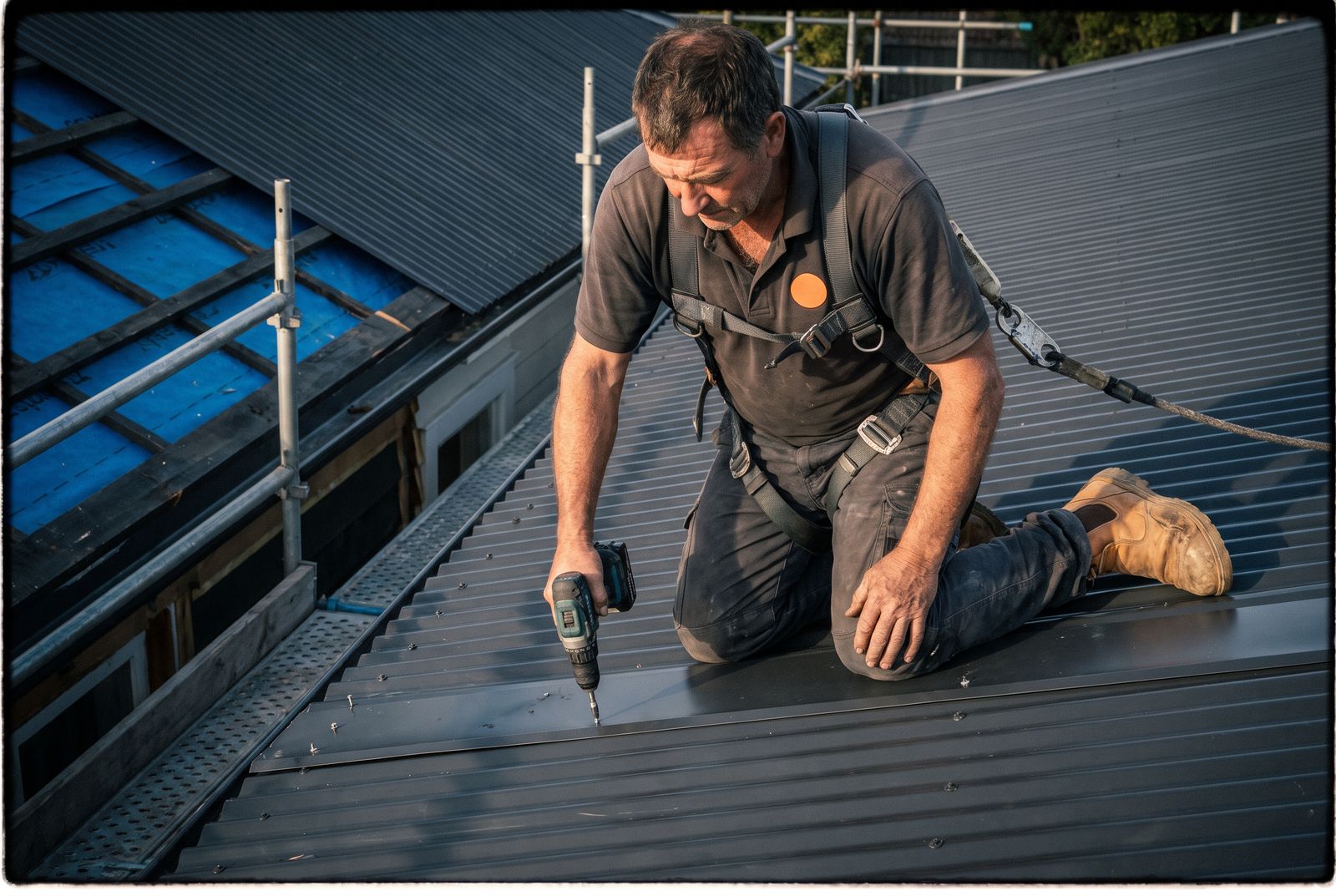 Re-RoofingA full re-roof replaces your old roofing, underlay and flashings with a new COLORSTEEL roof built to today's Building Code.
Read Next
Heavy Tile Roofs and Earthquakes: What Christchurch Learned in 2011
Heavy tile roofs put more weight high on a house, and in the 2010 and 2011 Canterbury earthquakes older, heavier homes w...
Read article
Nor'wester Roof Damage: What to Check After a Canterbury Windstorm
After a strong nor'wester, check from the ground for lifted or missing roofing sheets, loose ridging and barge flashings...
Read article
Do Gutter Guards Work in Christchurch? Leaves, Snow and Nor'westers
Yes, gutter guards work well at keeping leaves and twigs out of spouting, which is where most blockages in Christchurch ...
Read articleSources
- MBIE building.govt.nz: Canterbury residential guidance update issue 5 (chimney demolition)
- Natural Hazards Commission: Chimneys remain common hazards on NZ homes
- Christchurch City Council: Heritage guideline 3, chimneys
- Environment Canterbury: Burner types and Clean Air Zone rules
- WorkSafe: Working safely on roofs