
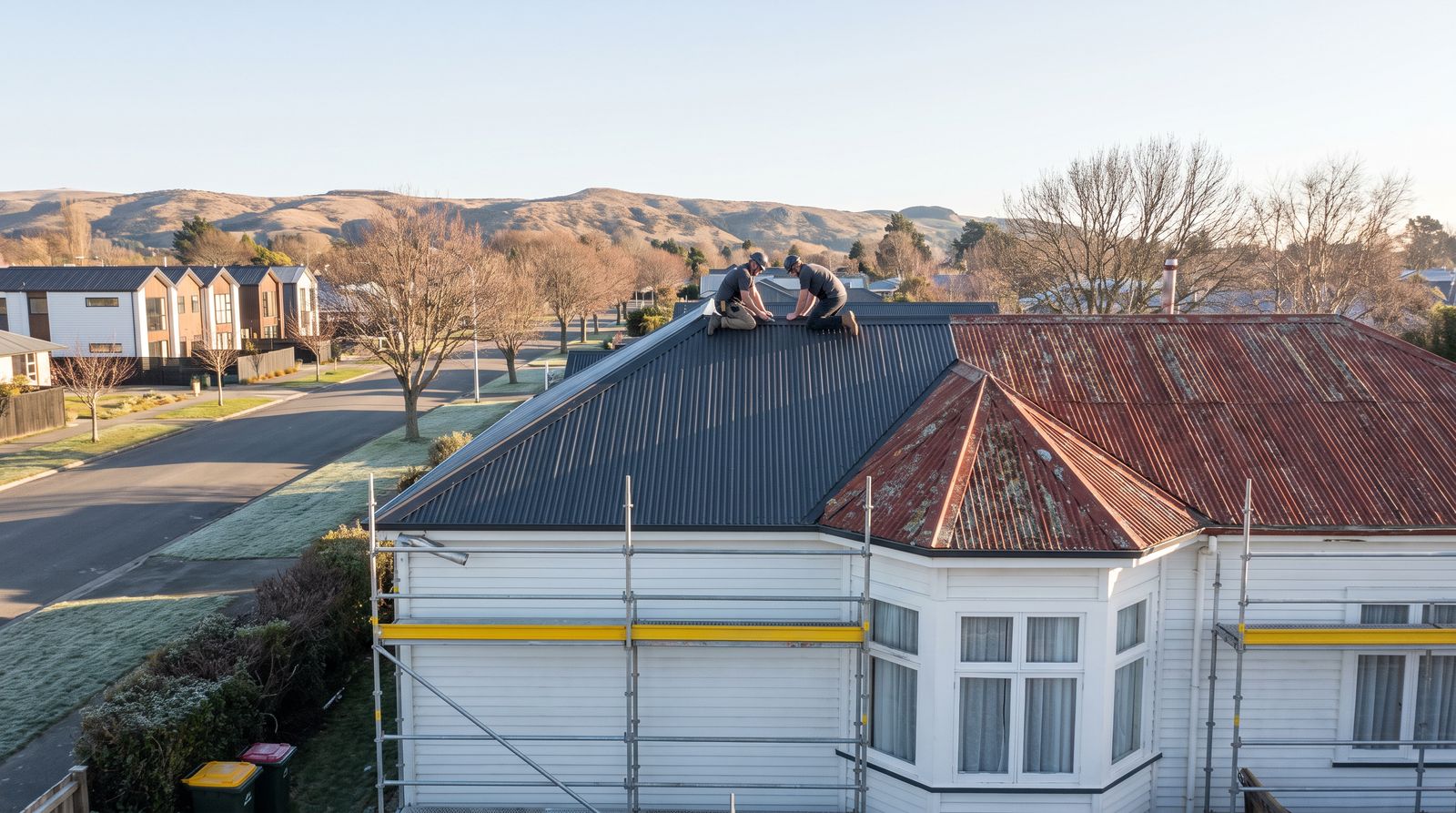
Salt is the quiet enemy of a beachside roof. It settles on every surface, draws moisture out of the air and keeps the steel damp long after the rest of the city has dried out. Roofs along Pegasus Bay and around Sumner can look fine from the street while the undersides of the spouting and the sheets under the eaves are already marking.
This guide is for owners near the coast from New Brighton and Southshore round to Sumner. It covers which roofing holds up best, how exposure is worked out for a property, how often to wash, which fixings and flashings to insist on, and why rust nearly always starts in the same places.
What roofing lasts best near the sea in Christchurch?
Pre-painted steel chosen for the site's exposure, with fixings and flashings of a matching grade, is the usual answer for coastal homes. The steel itself is only part of it. The product has to suit the environment category for that address, and the manufacturer's maintenance terms have to be realistic for the owner to follow.
COLORSTEEL publishes warranty and maintenance tables for its products across environments from mild to extremely severe. Its MAXAM product, for example, is listed as not recommended in the most extreme category, and for anything within 100 metres of salt water COLORSTEEL asks owners to contact it to confirm the warranty. That is why a coastal quote should name the product and say which environment it was chosen for.
Our COLORSTEEL and longrun roofing work near the beach starts with that check. Weight matters here too: the eastern suburbs had some of the worst ground damage in 2010 and 2011, and many homes have been repaired or rebuilt since, so a lightweight steel roof suits an older frame on that ground.
Is my house in a sea spray corrosion zone?
There is no single answer for a suburb. Corrosion exposure is set for each site under NZS 3604 and under the roofing manufacturer's warranty terms, so two houses in the same street can fall into different categories depending on how close they are to the surf, how sheltered they are and which way they face.
COLORSTEEL's environment categories give a feel for how quickly exposure changes with distance. The figures below are its east coast distances from breaking surf, which is the relevant coast for Pegasus Bay. Its own wording is that severe sites have an almost constant smell of salt spray in the air, and that the effect can be extended inland by prevailing winds and local conditions.
Use the table to understand the idea, not to place your own house. The category for your address is confirmed when the roof is specified.
| COLORSTEEL environment | East coast distance from breaking surf |
|---|---|
| Mild | More than 5 km |
| Moderate | 500 m to 5 km |
| Severe | 100 m to 500 m |
| Very severe | 25 m to 100 m |
| Extremely severe | 0 to 25 m |
How often should a beachside roof be washed?
The open roof face is generally treated as rain-washed, but sheltered areas need washing by hand, and the closer you are to the surf the more often. COLORSTEEL's maintenance tables, for example, list accessories such as gutters, downpipes and fascia for washing every three months in severe environments and monthly in very severe ones, with less frequent washing further from the sea.
Christchurch makes this more important than it sounds. The city is dry by New Zealand standards, with about 618 mm of rain a year at the airport, and the nor'wester is a hot, dry wind. Less rain means less natural rinsing, so salt sits on sheltered surfaces for longer between showers.
Wash with a soft brush and low-pressure water, working from the top down. High-pressure blasting can damage coatings, and WorkSafe warns it must never be used on roofing that contains asbestos. If you would rather not climb, our roof cleaning service can wash and treat the roof and spouting on a regular schedule.
Get a roof specified for the coast
Cheeky's Roofers confirms your site's exposure before recommending steel, fixings and flashings, and explains the maintenance the warranty expects.
Which fixings and flashings suit coastal homes?
Fixings and flashings should be at least as corrosion resistant as the roofing they hold, and compatible with it. A high-grade sheet held down by ordinary fixings will fail at the fixings first, and the rust then spreads to the sheet around each one.
The NZ Metal Roof and Wall Cladding Code of Practice warns that some metals react with each other. Lead, copper and some other materials, or water running off them, can start corrosion on coated steel, so coastal details need materials chosen to work together. Points worth checking on a quote:
- Fixing type and grade named, and suited to the roofing product and environment
- Flashings made from the same or a compatible material as the roof
- No copper or lead runoff onto coated steel from aerials, pipes or old flashings
- Cutting done so swarf and filings are cleaned off the sheets the same day
- Cut edges and laps finished as the manufacturer specifies
Why do roofs rust first under the eaves?
Because those areas are unwashed. Rain rinses salt off the open roof face, but it never reaches the underside of the spouting, the soffits, the sheets tucked under an upper storey or the back of a parapet. Salt builds up there, holds moisture and keeps the steel damp, which is exactly what drives corrosion.
COLORSTEEL describes these as areas that may not receive enough natural rain washing and should be cleaned regularly. On coastal homes, laps, fixings and the edges of flashings show marks early for the same reason: they are crevices where salt and moisture collect. Catching that early, with washing and spot repairs, helps a roof last far longer than leaving it until rust shows from the street.
What is different about New Brighton, Southshore and Sumner?
All three face the sea, but the houses and sites vary. New Brighton runs along Pegasus Bay and has a mix of older seaside cottages, family homes from the 1950s onward along the spit, and post-quake rebuilds. Older iron roofs here often show rust first at fixings, laps and flashings, and heavier older roofs are candidates for a lighter steel re-roof.
Southshore sits on the spit between the estuary and the sea, so homes there have salt water on both sides of them. Sumner faces the open sea from a coastal valley, with hillside homes on Clifton and Scarborough that bring complex rooflines, decks and steep access. On those hill sites, wind exposure is set for each property from the consent plans, and scaffolding and material handling are a bigger part of the cost.
Inland suburbs in the east, such as Linwood and Woolston, are further from the surf, but exposure still needs confirming at the address rather than assuming.
When should you call a roofer about a coastal roof?
Call when you see rust at fixings, laps, flashings or under the spouting, or before you choose steel for a new roof or re-roof. Cheeky's Roofers checks the site's exposure, recommends a product with the warranty conditions explained, and specifies fixings and flashings to match.
We cover the coast from New Brighton and Southshore to Sumner as part of our east and coastal Christchurch service area. If you are not sure how much life a coastal roof has left, a written roof inspection with photos gives you a clear starting point. You can book online or call.
The short answer: by the sea, match the steel, fixings and flashings to your address, and wash the sheltered areas regularly. Do both and a beachside roof can last as well as one inland.
Frequently Asked Questions
Is PVC spouting better near the sea?
PVC does not rust, which is an advantage in salt air, but it is affected by sunlight and needs brackets and downpipes that suit the exposure too. Steel spouting in a grade matched to the site also performs well when washed. The right choice depends on the house, the look you want and how much maintenance you will do.
Can I paint a rusty coastal roof?
If the rust is light and the steel is still sound, a roof can often be prepared, treated and painted. Where rust has eaten through or spread under laps, painting only hides it for a while. A roofer should check the sheets before you pay for paint.
Does salt damage void my roof warranty?
Warranties for coated steel usually depend on the product suiting the environment and the owner following the maintenance terms, such as washing unwashed areas. Check the warranty paperwork for your roof. If you do not have it, the manufacturer may be able to help with the details.
How far inland does sea spray reach?
There is no fixed line. COLORSTEEL's moderate category on the east coast runs out to 5 km from breaking surf, and it notes that prevailing winds and local conditions can extend exposure inland. That is why exposure is confirmed for each site rather than each suburb.
Should I rinse the roof after an easterly or a storm?
A gentle rinse of the sheltered areas after strong onshore wind can help, because it removes fresh salt before it builds up. Use a hose and soft brush, not high pressure, and only where you can work safely. Otherwise, stick to the regular washing schedule your roofing product sets.
Our Services
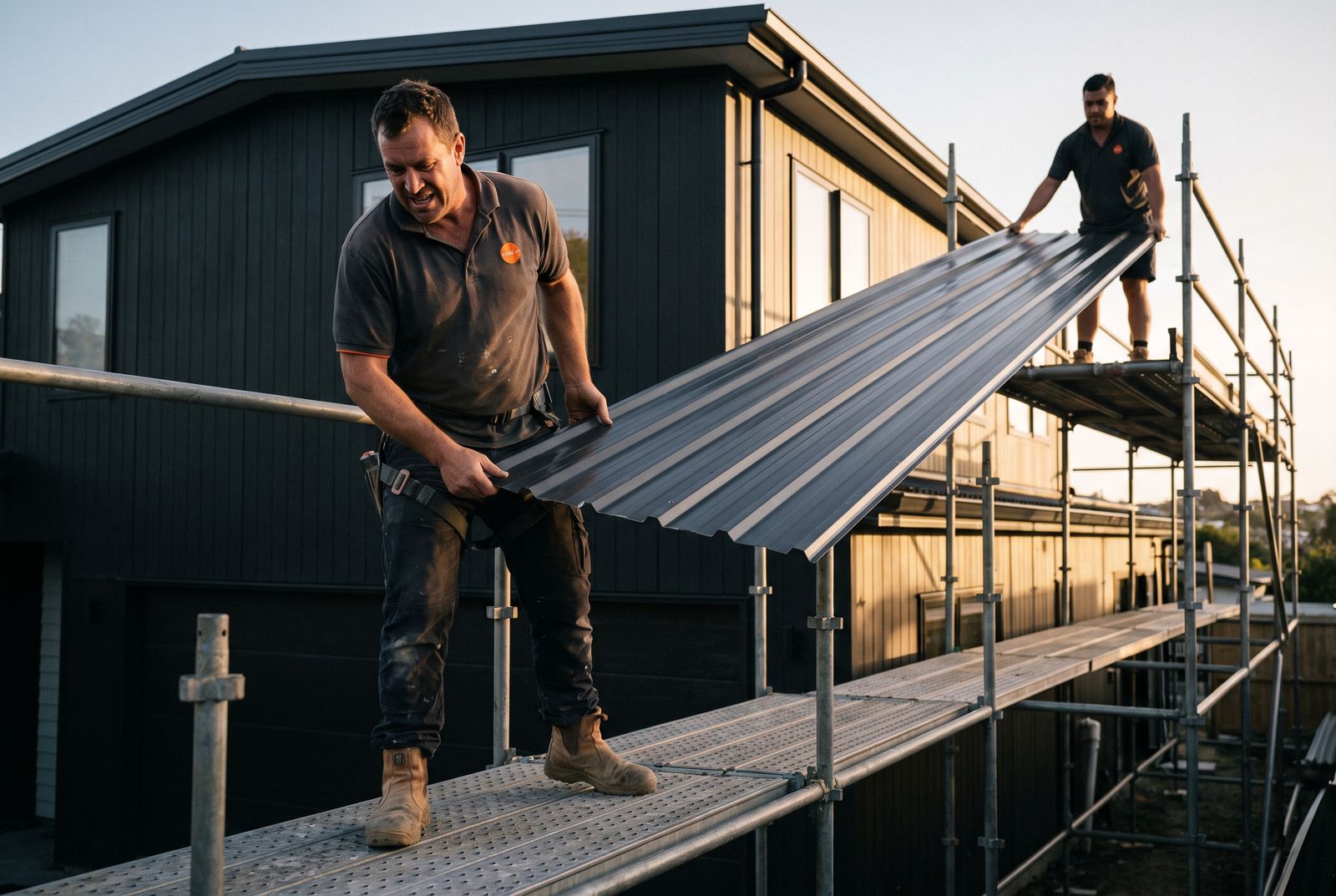 Metal RoofingLongrun COLORSTEEL roofing in corrugate and trapezoidal profiles, rolled to length for your roof.
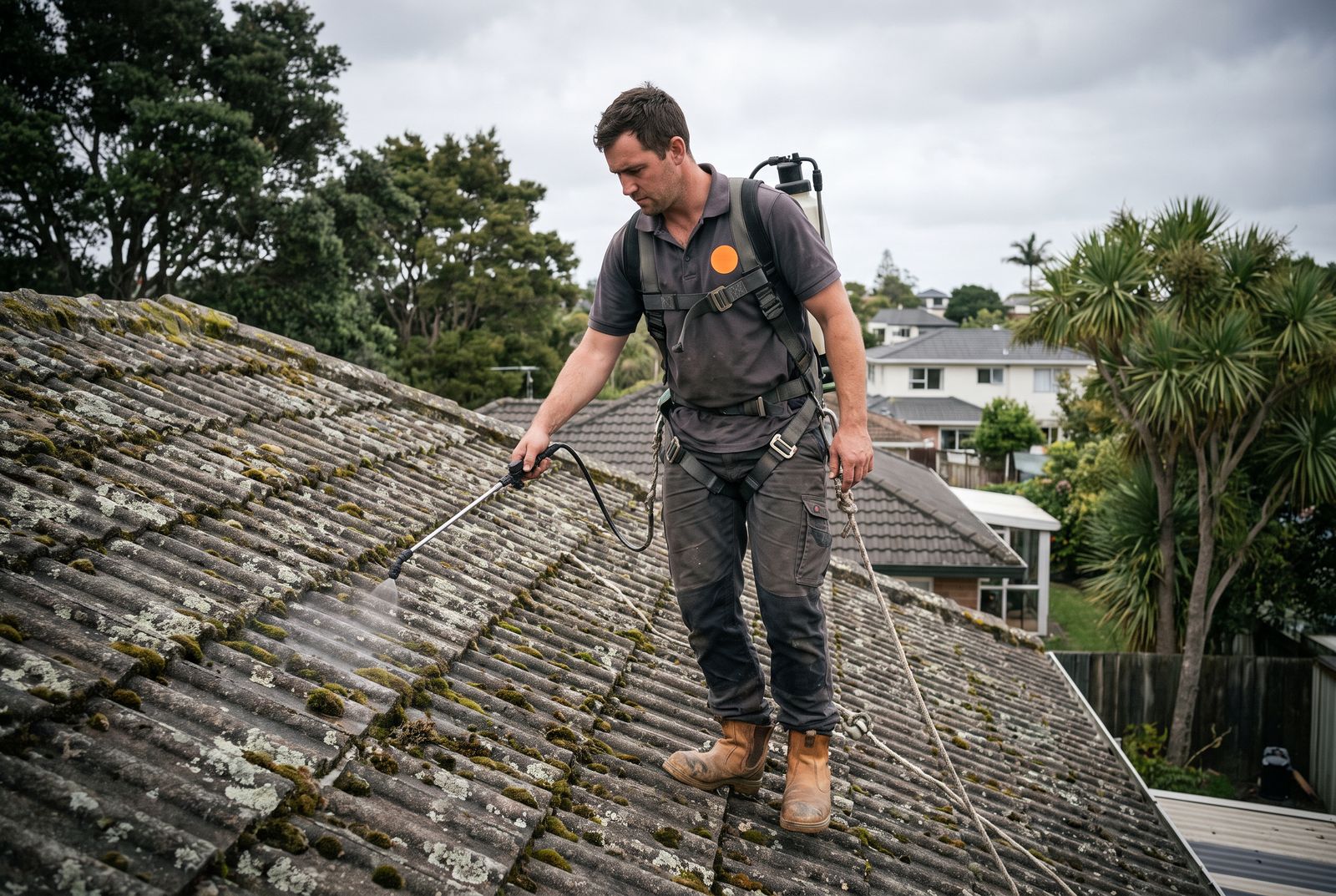 Roof WashingMoss, lichen and grime removed with the right treatment for your roof type, without damaging the surface.
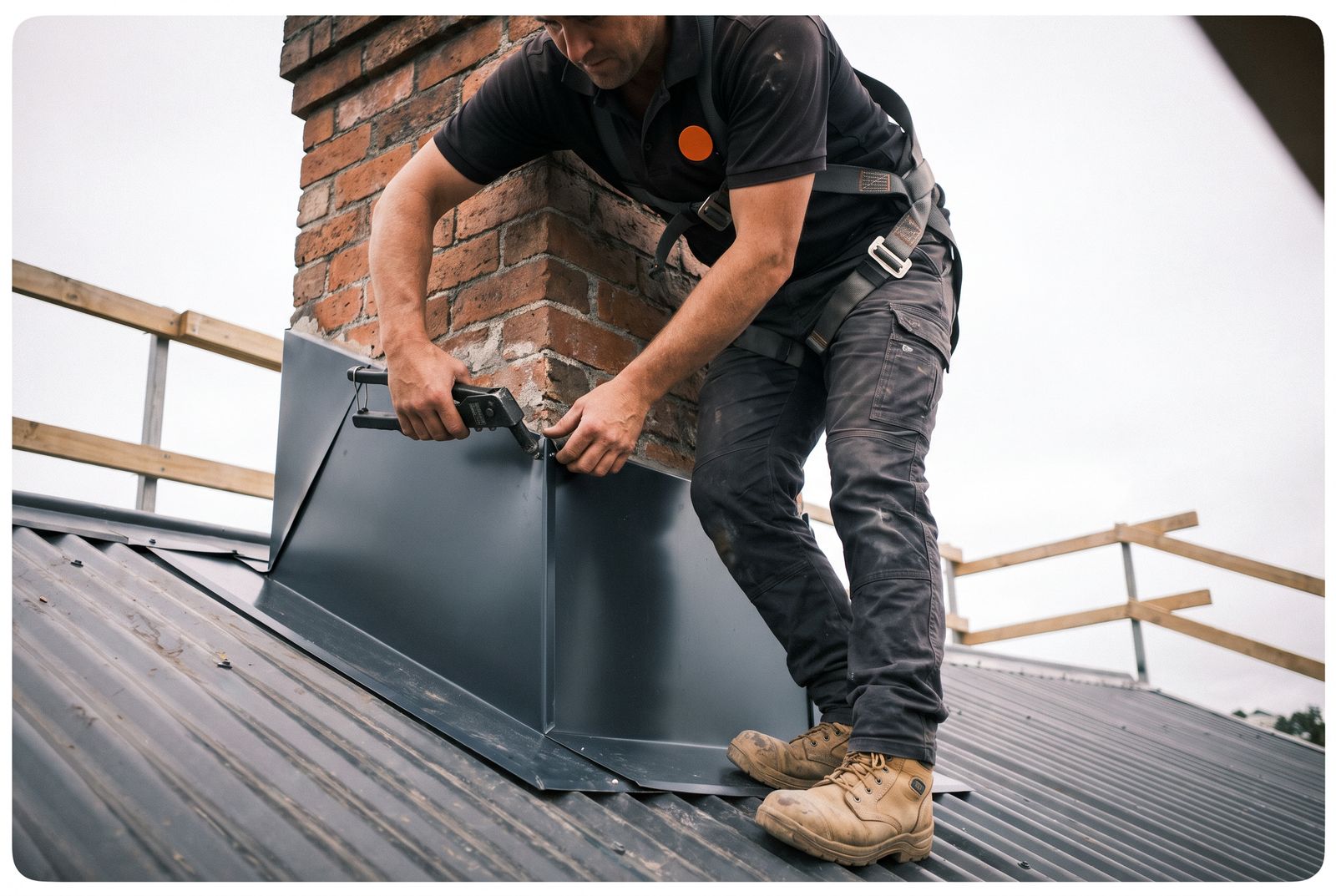 Roof FlashingFlashings around chimneys, skylights, walls and valleys cause most leaks.
Read Next
Earthquake-Repaired Roofs in Christchurch: What to Check Before You Buy
Buying a Christchurch house with earthquake repairs is normal: the Canterbury Home Repair Programme alone repaired over ...
Read article
Do You Need Building Consent to Re-Roof in Christchurch?
Usually not, if the new roof replaces the old one with comparable materials in the same position. Schedule 1 of the Buil...
Read article
Nor'wester Roof Damage: What to Check After a Canterbury Windstorm
After a strong nor'wester, check from the ground for lifted or missing roofing sheets, loose ridging and barge flashings...
Read article