
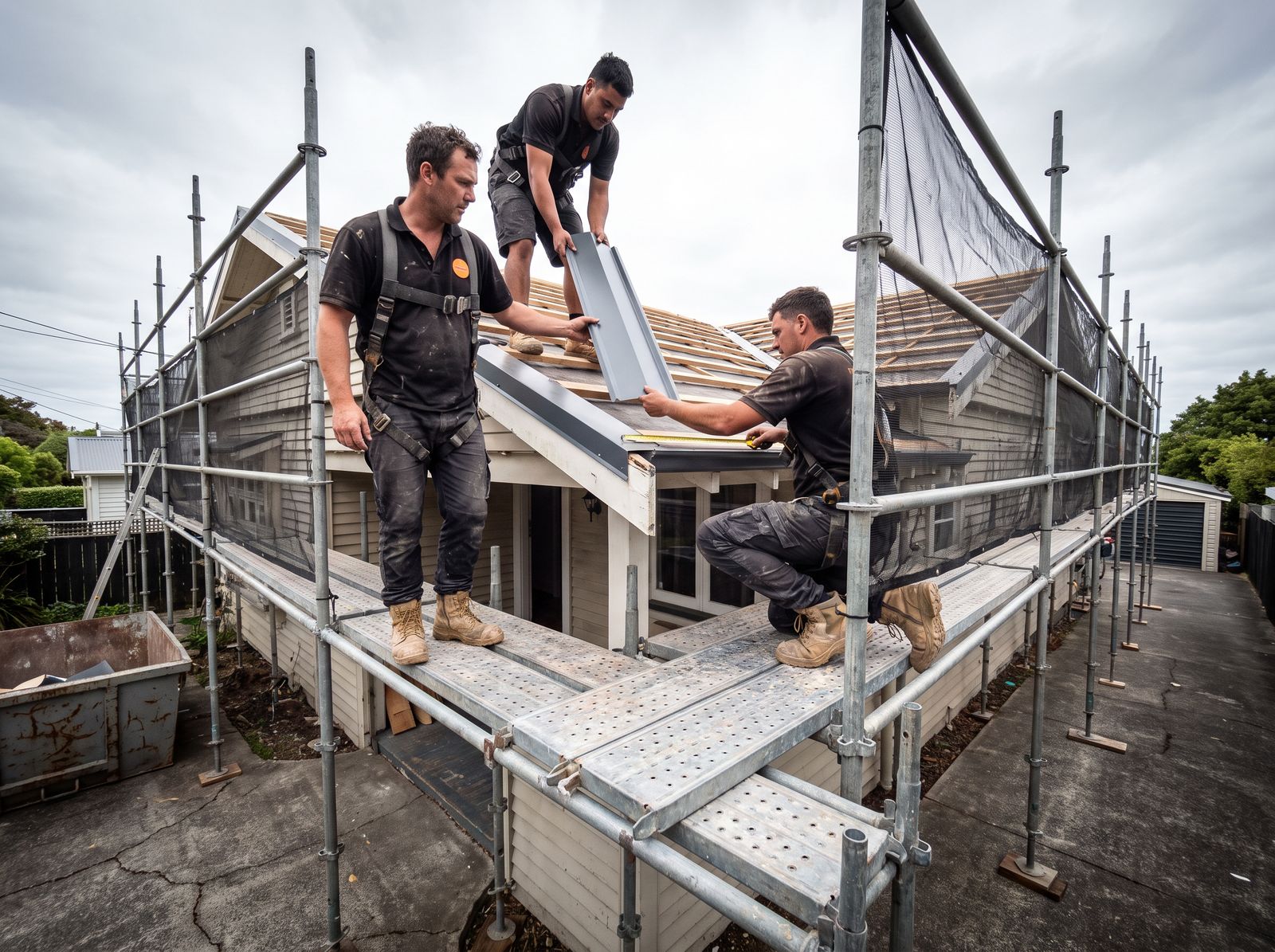
A repaired roof is not a warning sign in itself. After the 2010 and 2011 earthquakes, tens of thousands of Christchurch homes had repair work, and many roofs were patched, re-flashed or replaced. What matters to a buyer is whether the work was finished properly and how the roof is performing now.
This guide is a buyer's checklist from a roofer's point of view. It covers the problems that can show up after repairs, how to tell old work from new, why re-levelled houses deserve a closer look at the flashings, what documents to ask the seller for, and where to go if an earlier repair turns out to be faulty.
Why are earthquake-repaired roofs so common in Christchurch?
Because roofs and chimneys took a large share of the damage. The Mw 7.1 Darfield earthquake struck on 4 September 2010, followed by the Mw 6.2 Christchurch earthquake on 22 February 2011. Many chimneys were damaged or brought down across the Canterbury quakes, and each one left a roof to be patched or rebuilt.
The Canterbury Home Repair Programme, run for the Earthquake Commission, repaired over 67,000 homes for claims in the $15,000 to $100,000 range per event. Many more homes were repaired through private insurers or rebuilt. On 1 July 2024 the Earthquake Commission became the Natural Hazards Commission Toka Tū Ake (formerly EQC), so older paperwork will carry the EQC name.
What roof problems can show up after quake repairs?
Most repaired roofs are fine, but a few details are worth a close look because they are where repairs meet original work. An inspector will typically check:
- Former chimney openings that were closed off, and how the patch or new sheet ties into the roof
- Flashings where the roof meets walls, rebuilt chimneys or extensions
- Tile roofs where tiles were lifted, replaced or rebedded, and whether the new tiles match and sit flat
- Ridges and hips that were rebedded or re-pointed
- Spouting that has lost its fall towards the downpipes
- Roof space framing for staining, old water marks or signs of movement
How can I tell if a roof was replaced or repaired after 2011?
The paperwork is the most reliable guide, but the roof itself gives clues. Newer steel sheets or tiles often look brighter or slightly different in colour from the rest, newer flashings may be a different profile or finish, and a closed-off chimney position usually shows as a patch or a run of newer roofing up to the ridge.
Inside the roof space, look for new underlay next to old, fresh timber beside weathered framing, and new fixings around the old chimney area. On a full re-roof, the whole roof will look consistent, and the seller should have a contractor's invoice and product warranty.
A written roof inspection pulls these clues together, with photos of each one, so you are not relying on a quick look from the street. It also notes heavy concrete tile roofs, which are common on older Christchurch houses and are worth pricing a tile to metal conversion for if you plan to own the house for the long term.
Buying a repaired home? Check the roof first
Cheeky's Roofers gives you a written roof report with photos, so any repair work is in your offer and not a surprise after settlement.
Why can flashings leak after a house has been re-levelled?
Because flashings are made to fit the shape of the house at the time they are installed. When a house is re-levelled, parts of the structure can move relative to each other, and a flashing that was snug at a wall junction, a chimney or an extension can open up, stretch or tilt so that water runs behind it instead of off it.
Foundations were the most common re-repair problem identified after the Canterbury repairs, according to Massey University research. That does not mean a re-levelled house will have roof problems, but it is a good reason to look closely where the roof meets walls and where newer and older parts of the house join. Spouting falls are worth checking too, because a small change in level can leave water sitting in a gutter.
If a flashing has moved, it can usually be refitted or replaced without disturbing the rest of the roof. Our roof flashing repairs and roof leak repairs work covers exactly these junctions.
What paperwork should the seller have for roof repairs?
Ask for anything that shows what was done, by whom and whether it was signed off. The table sets out the usual documents and why each one helps. Not every house will have all of them, and missing paperwork is a reason to ask questions rather than a reason to walk away.
The Land Information Memorandum from the council is worth ordering on any Christchurch purchase. It lists consents and Code Compliance Certificates, and on flat land in the former green zone it can also show the technical category, TC1, TC2 or TC3, which describes the likely future liquefaction damage.
| Document | Where it comes from | What it tells you |
|---|---|---|
| Scope of works and completion record | Seller, insurer or the repair programme | What was repaired on the roof and when |
| Land Information Memorandum | The council for the address | Consents, Code Compliance Certificates and land information |
| Building consent and Code Compliance Certificate | Council, if the work needed consent | That consented work was inspected and signed off |
| Contractor invoice and product warranty | Seller or roofing contractor | Product, date and any warranty still running |
| Pre-purchase roof inspection | An independent roofer you engage | The condition of the roof today |
Who pays if an earlier repair was faulty?
It depends on who did the work, when, under which claim, and what has happened since, so there is no single answer and we cannot promise any outcome. The Natural Hazards Commission Toka Tū Ake (formerly EQC) has dealt with re-repairs of earlier work, and in 2019 an ex gratia scheme covered buyers of on-sold over-cap homes with defective repairs. A class action about Canterbury repairs is also before the courts.
For a specific house, the practical steps are to get the roof inspected, gather the repair paperwork, and then talk to a lawyer, the Natural Hazards Commission or the insurer involved. Since 1 July 2024, the Commission's building cover is $300,000 plus GST per dwelling per event, but that applies to new events, not to old repairs.
Before you buy, the simplest protection is knowing what you are buying. A roof report with photos lets you factor any repair work into your offer instead of discovering it later.
When should a buyer get a roof inspection?
Before you make an unconditional offer, and ideally during your due diligence period. Cheeky's Roofers inspects the roof, flashings, spouting and roof space, records what is original and what has been repaired, and ranks anything that needs attention by urgency, so you can price it in.
We inspect homes right across the city, including the eastern suburbs, where much of the worst ground damage occurred and repaired and rebuilt homes are especially common. You can book online or call to arrange a time that fits your settlement dates.
The short answer: a quake-repaired roof is normal in Christchurch. Check the junctions, read the paperwork and get an independent roof report, and you will know exactly what you are taking on.
Frequently Asked Questions
Is a house with earthquake repairs a bad buy?
Not necessarily. Repaired homes are common in Christchurch, and a well-finished repair can leave a house in good condition. The key is checking the quality of the work and the paperwork behind it. Get independent inspections, including the roof, and read the LIM before you commit.
Does a general building inspection cover the roof?
A general pre-purchase building inspection looks at the whole house, including the roof, at a lighter level. A dedicated roof inspection goes further into flashings, fixings, spouting and the roof space. On a repaired house, many buyers choose both.
Should I still get a roof report on a rebuilt house?
A full rebuild usually comes with a newer roof, consent and a Code Compliance Certificate, which is reassuring. A roof report still confirms the roof was finished well and has been maintained since. It is a smaller risk than an older repaired house, but not zero.
What does the land category on the LIM mean for the roof?
Technical categories describe likely future liquefaction damage on flat land, from TC1 to TC3. They mainly affect foundations rather than roofing. A lighter roof reduces the load on a house's structure, which some owners on TC2 or TC3 land weigh up when re-roofing.
Can you inspect the roof before an auction?
Yes, if the agent and seller allow access. Book early, because pre-auction periods are short. We record what we can see safely and say plainly what could not be checked, such as a roof space without access.
Our Services
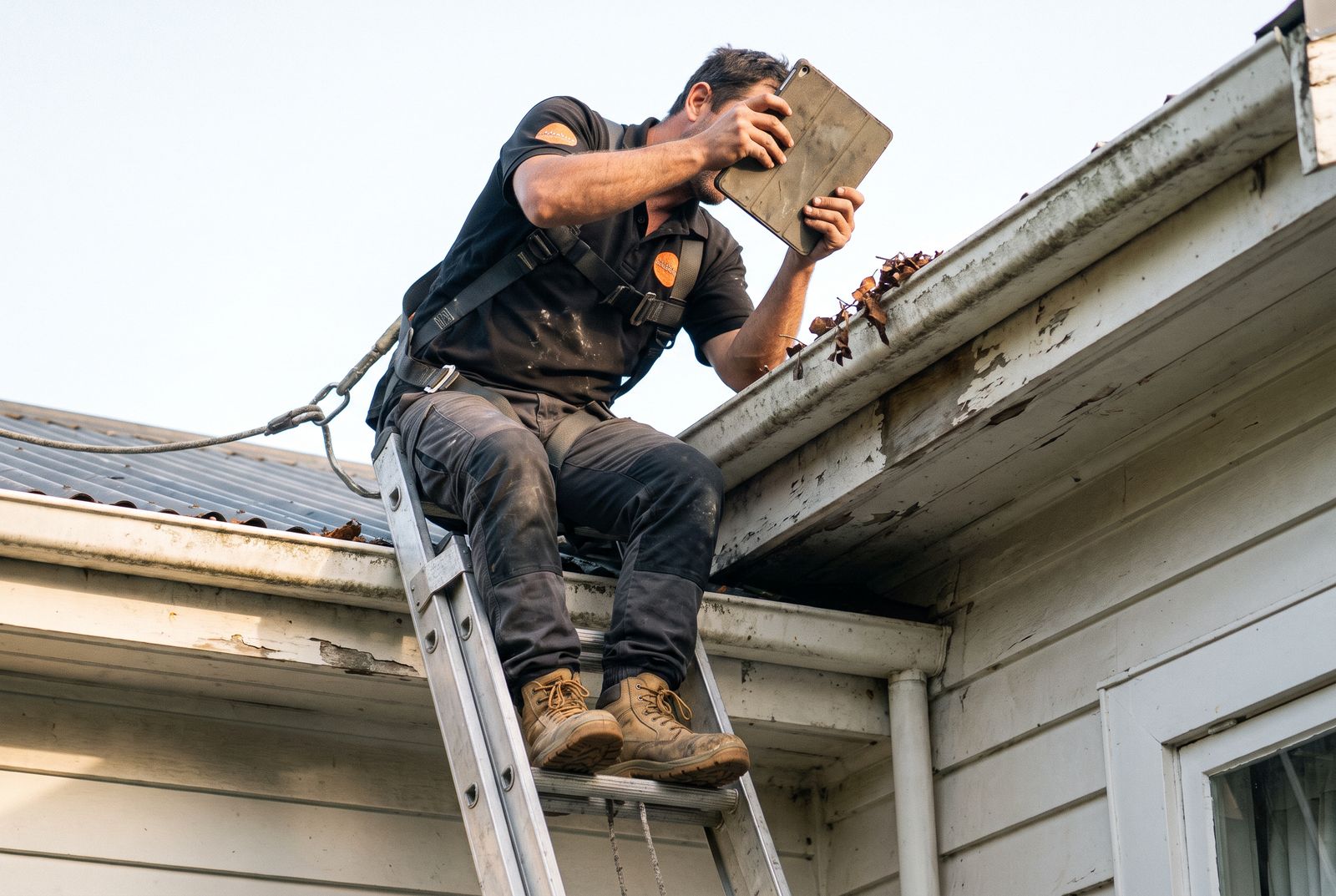 Roof InspectionsA detailed roof report with photos and honest repair or replace advice, for owners, buyers and insurers.
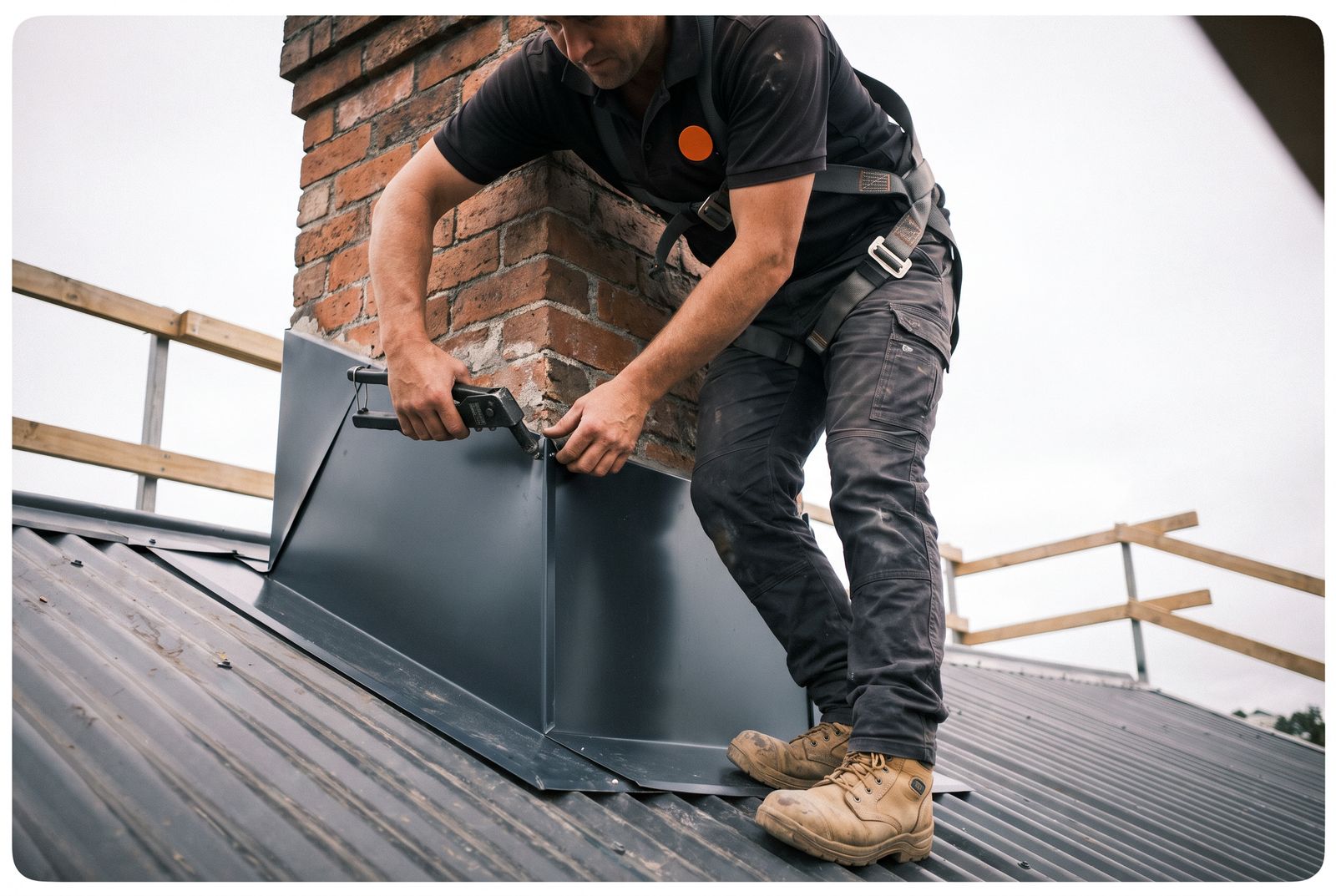 Roof FlashingFlashings around chimneys, skylights, walls and valleys cause most leaks.
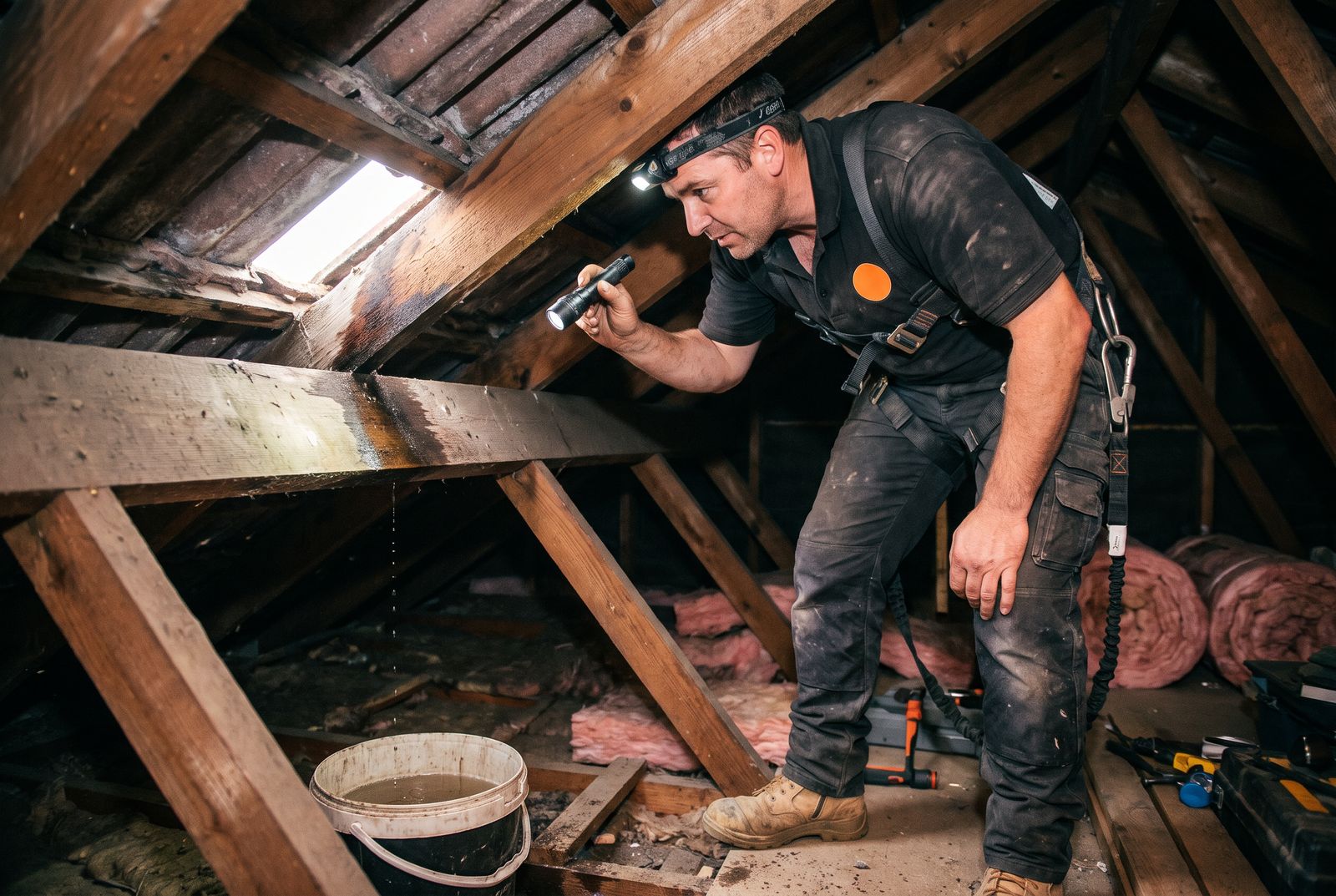 Roof Leak RepairsWe track a leak to its source, which is often nowhere near the stain on your ceiling, and fix the cause.
Read Next
Do You Need Building Consent to Re-Roof in Christchurch?
Usually not, if the new roof replaces the old one with comparable materials in the same position. Schedule 1 of the Buil...
Read article
Heavy Tile Roofs and Earthquakes: What Christchurch Learned in 2011
Heavy tile roofs put more weight high on a house, and in the 2010 and 2011 Canterbury earthquakes older, heavier homes w...
Read article
Roofing Near the Beach: New Brighton, Southshore and Sumner
Near the sea in Christchurch, the roof that lasts is one where the steel grade, fixings, flashings and maintenance all m...
Read articleSources
- Natural Hazards Commission: Canterbury Home Repair Programme
- Massey University: Christchurch re-repairs just the tip of the quakeberg
- building.govt.nz: Repairing and rebuilding houses affected by the Canterbury earthquakes
- Insurance News: chimney damage in the Canterbury earthquakes
- Wikipedia: Natural Hazards Commission