

Most re-roofs in Christchurch go ahead without a building consent, and that surprises people. The rules are built around a simple idea: putting back what was there, in the same place, is maintenance, while changing what the house carries or how it is built is new building work. The grey areas sit between those two.
This guide walks through the common cases: like for like, heavier and lighter roofs, heritage listings, chimneys and skylights, which council you deal with, and the paperwork you should have when the job is finished. It is general guidance, and the council is the final word for any particular house.
Do I need consent to replace a roof like for like?
Generally no. Exemption 1 in Schedule 1 of the Building Act covers repair and maintenance using comparable materials, and replacing a component with a comparable one in the same position. Steel replaced with steel on the same structure usually fits, as does a tile roof re-laid with comparable tiles.
There are limits. Exemption 1 does not cover the complete or substantial replacement of a specified system, and it does not cover replacing a component that failed the Building Code's durability requirements early. Clause B2 expects roof cladding to last at least 15 years, so a roof that failed well before then may need consent to replace.
Exempt does not mean unregulated. The new roof still has to meet the Building Code, including clause E2 External Moisture, which covers keeping water out. A good re-roofing quote explains how the work will meet those rules even when no consent is involved.
When does a different or heavier roof need consent?
Moving to a heavier roof, such as from corrugated iron to concrete tiles, usually needs consent because the extra weight can affect how the structure behaves. Rafters, purlins, walls and foundations may all need to be checked by a designer or engineer.
Going lighter is a different question. A BRANZ article on replacing concrete or masonry tile roofs notes that the structure should easily carry the lighter load, but says wind uplift should be top of mind, with NZS 3604 setting out the top plate connections needed. Whether a particular tile to metal re-roof needs consent depends on what changes: new purlins or battens, extra fixings for uplift, or changes to the framing.
If you are unsure whether your job is exempt, the council can grant a discretionary exemption under Exemption 2 of Schedule 1, or you can apply for consent. Asking first costs far less than finding out at sale time that work should have been consented.
| Job | Consent usually needed? | Why |
|---|---|---|
| Steel roof replaced with comparable steel | No, if Exemption 1 applies | Comparable material in the same position |
| Iron replaced with concrete tiles | Likely yes | Heavier roof can affect the structure |
| Concrete tiles replaced with steel | Depends on the work | Lighter load, but uplift fixings and framing changes need checking |
| Roofing that failed early under B2 | Likely yes | Exemption 1 excludes components that failed durability |
| Roof on a new extension | Yes | New building work, not a replacement |
Does a heritage listing change the rules in Christchurch?
It can, and it is a separate check from building consent. Heritage protection sits in the Christchurch District Plan. Plan Change 13 revised the historic heritage rules and the Schedule of Significant Historic Heritage, and councillors approved nearly all of the hearing panel's recommendations, including nine new Residential Heritage Areas.
Parts of Plan Change 13 were withdrawn in December 2024, including the Heaton Street and Piko/Shand state housing heritage areas, and the Lyttelton Residential Heritage Area was reduced. Because the rules have moved, check whether your house is a scheduled heritage item or sits in a Residential Heritage Area before you change the roof material or profile.
Christchurch City Council's heritage guidance also covers chimneys: after the 2010 earthquake some were demolished to floor level, and on heritage buildings the council prefers them to be reconstructed where possible. A building consent exemption does not override a heritage rule, so both questions need answering.
Know the consent position before you start
Cheeky's Roofers checks consent and heritage questions up front and gives you an itemised written quote after a free measure.
Do I need consent to remove a chimney or add a skylight?
Often not, but both have conditions. Government guidance for Canterbury says demolishing a chimney does not need building consent if the building is no more than three storeys and the work does not affect the primary structure, a specified system or fire separation. Our separate guide to removing a chimney in Christchurch covers the roof patching and safety side.
Skylights follow similar logic. Replacing an existing roof window in an existing home can be exempt, subject to conditions. A new opening that means cutting structural framing may need consent, because the framing has to be trimmed and supported properly. Ask your skylight installer to confirm the position before work starts.
Which council handles roofing consents?
The council for the address. Christchurch City Council handles consents and Code Compliance Certificates in the city and on Banks Peninsula. Selwyn District Council covers towns such as Rolleston and Lincoln, and Waimakariri District Council covers Rangiora, Kaiapoi and Pegasus. Each is its own building consent authority with its own forms and fees.
If you are buying, the Land Information Memorandum (LIM) for the property lists the consents the council holds. That is the easiest way to check whether earlier roof work was consented. Homes in the Selwyn and Waimakariri towns are often newer, but extensions and re-roofs still show up on the LIM if they were consented.
What paperwork should my roofer give me at the end?
Whether or not the job was consented, you should finish with a clear record of what was done and what it is guaranteed for. Keep these with the house documents:
- An itemised invoice that describes the work, the roofing product, profile and colour
- The manufacturer's product warranty and its maintenance conditions
- The roofer's written workmanship guarantee
- Photos of the underlay, flashings and any repairs made to the framing
- For consented work, the Licensed Building Practitioner's record of work
- For consented work, the Code Compliance Certificate issued by the council after the final inspection
What if earlier roof work was done without consent?
If work that needed consent was done without it, the council can issue a certificate of acceptance after assessing it. That process can involve opening up work so it can be checked, which is why it is better to settle the consent question before a roof goes on.
Where consent is needed for a re-roof, roofing on a house is usually restricted building work, which a Licensed Building Practitioner with the roofing licence must carry out or supervise. Cheeky's Roofers confirms the consent position and any heritage listing before we quote, so you know whether the job is exempt, needs a discretionary exemption or needs consent. If a full roof replacement is on the cards, that check is part of the free measure.
The short answer: like for like is usually exempt, heavier roofs and structural changes usually are not, and heritage is a separate question. Check with the council when in doubt, and keep the paperwork.
Frequently Asked Questions
Can I re-roof over the top of my old roof?
Laying new roofing over old is a different job from a like-for-like replacement, and it still has to meet the Building Code for weight, fixing and moisture. Old roofing left underneath can hide problems and trap water. Talk to the council and your roofer before considering it.
Does a roof colour change need consent?
A building consent is not usually needed just to change colour on a like-for-like re-roof. Heritage rules and private covenants can still limit colour choices, so check whether your house is a heritage item, in a Residential Heritage Area, or covered by a subdivision covenant.
How long does a roofing consent take?
Councils have statutory timeframes for processing building consents, but the overall time also depends on how complete the application is and whether the council asks for more information. Ask your designer or roofer to allow for consent in the project timeline.
Do I need consent to replace spouting?
Replacing spouting and downpipes with comparable ones in the same position is generally treated as repair and maintenance. Changes to how stormwater is discharged, or connections to new drains, are a different matter and may involve a drainlayer and the council.
Who applies for the consent, me or the roofer?
Either can, but the owner is responsible for making sure consent is obtained when it is needed. Many owners ask their designer or roofing contractor to prepare and lodge the application. Make sure the plans match the work that will actually be done.
Our Services
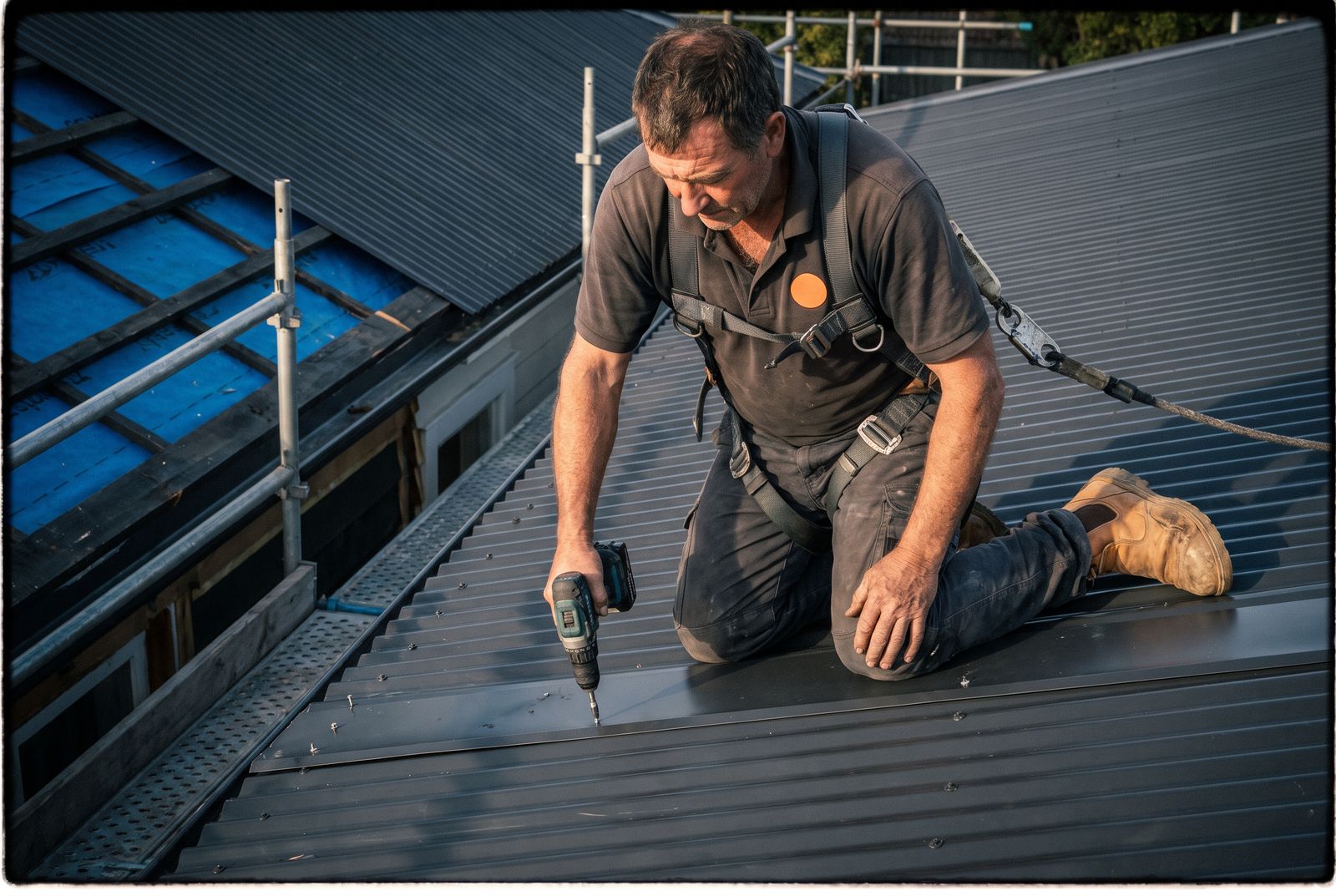 Re-RoofingA full re-roof replaces your old roofing, underlay and flashings with a new COLORSTEEL roof built to today's Building Code.
 Roof ReplacementWhen repairs no longer make sense, we replace the roof completely and leave you with a roof that is good for decades.
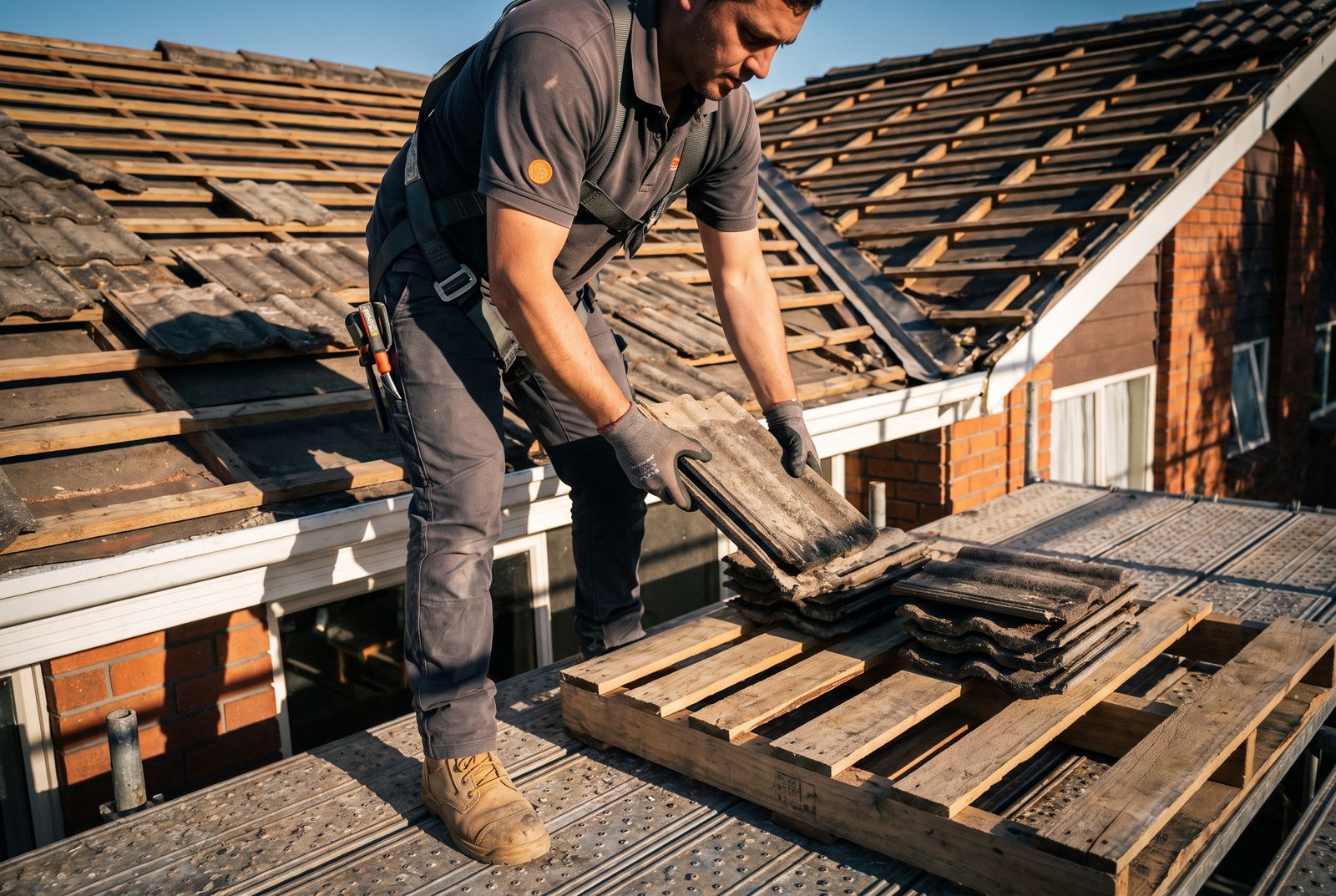 Tile to Metal Re-RoofingSwapping heavy concrete tiles for lightweight steel removes weight from the frame and ends the cycle of cracked tiles and leaks.
Read Next
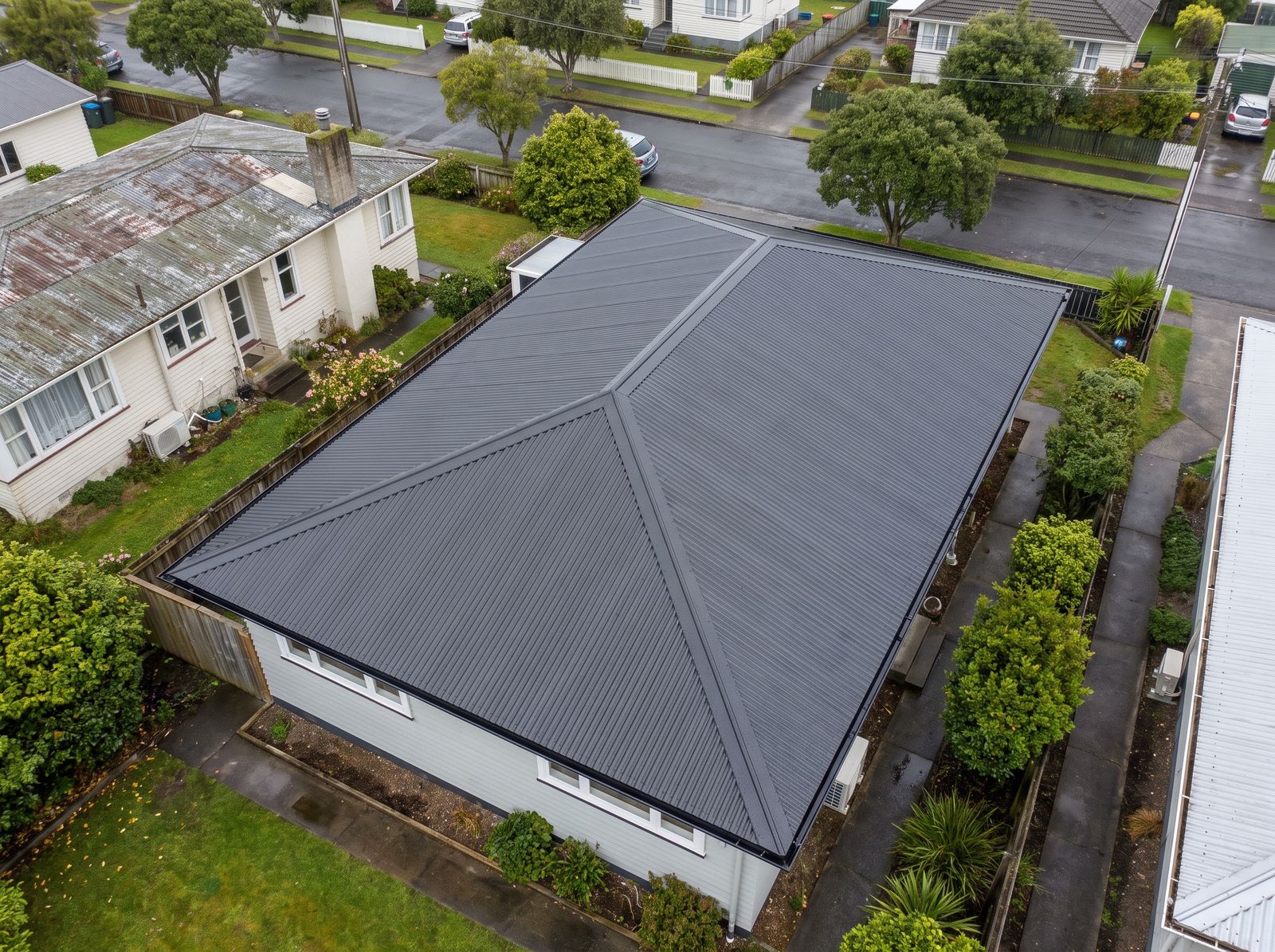
Removing a Chimney in Christchurch: Consent, Roof Patching and Safety
Most Christchurch homeowners can remove a brick chimney without building consent, as long as the building is no more tha...
Read article
Earthquake-Repaired Roofs in Christchurch: What to Check Before You Buy
Buying a Christchurch house with earthquake repairs is normal: the Canterbury Home Repair Programme alone repaired over ...
Read article
Heavy Tile Roofs and Earthquakes: What Christchurch Learned in 2011
Heavy tile roofs put more weight high on a house, and in the 2010 and 2011 Canterbury earthquakes older, heavier homes w...
Read articleSources
- building.govt.nz: Exemption 1.1, general repair, maintenance and replacement
- BRANZ Build 168 via MBIE Code Hub: Replacing a concrete or masonry tile roof
- Christchurch City Council: Plan Change 13, heritage
- MBIE building.govt.nz: Canterbury residential guidance update issue 5
- building.govt.nz: Restricted building work