
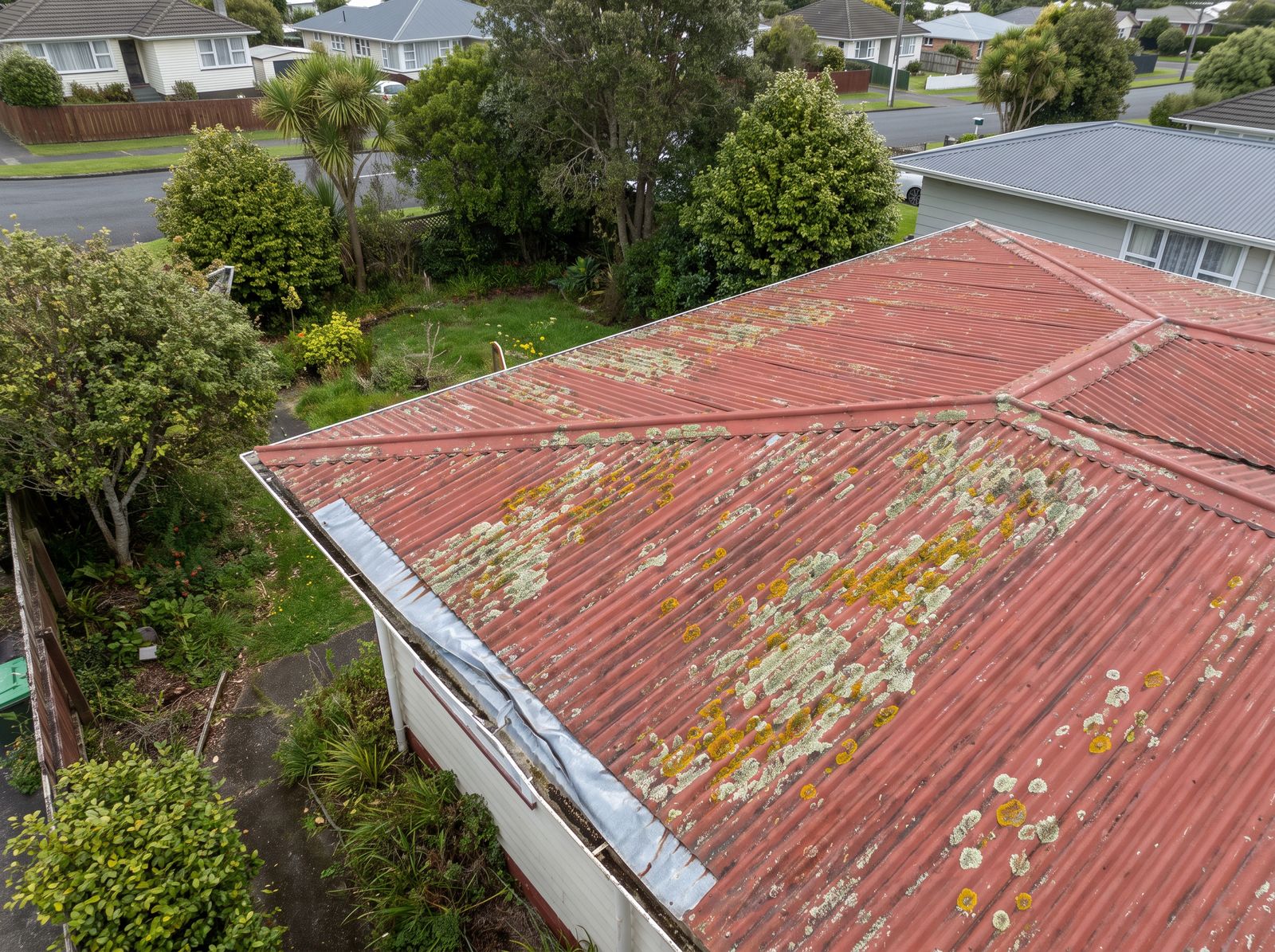
Many Canterbury households are working through the same decision as their wood burners reach the end of their permitted life under Environment Canterbury's Clean Air rules. Most of the attention goes on what replaces the burner: a heat pump, an ultra-low emission burner or something else. The hole in the roof gets far less thought, and it is the part that causes leaks if it is rushed.
This guide is about the roof side of the job. It covers what is left behind when a flue comes out, when a patch is enough and when the sheet should be replaced, how to check your burner's expiry date, whether a new burner can reuse the old opening, and how to line up the trades so the house is never open to the weather.
What happens to the roof when a wood burner flue is removed?
Taking the flue out leaves an open hole in the roofing, an old flashing around it, and a matching hole in the ceiling below. The flue usually passes through the roof inside a flashing that is sealed and fixed to the roofing, with a cowl on top. Once the flue and cowl are lifted out, that flashing no longer seals anything and the roof is open to rain.
The hole needs a temporary cover the same day, and a permanent repair soon after. A tarp tied over a hole rarely survives long in Canterbury: the nor'wester can reach storm force, and loose covers tend to lift and flap until they tear or pull fixings out. A properly fixed temporary cover, or better, a permanent repair on the day, is the safer plan.
It is also a good moment to look in the roof space. Old flue areas can hide soot, debris and staining from years of small leaks around a tired flashing, and checking the framing and insulation there now saves finding a problem after the ceiling has been patched.
Can the flue hole be patched or does the sheet need replacing?
A patch can work on a small hole in good roofing, but replacing the sheet from the hole up to the ridge is the more durable fix on most steel roofs. Water running down the roof from above has to pass over any patch, so its edges and sealant are working every time it rains, and sealants weaken with sun exposure over the years. A full-length sheet has no joint for water to find.
The choice depends on where the flue sat, the profile and age of the roofing, and whether a matching sheet is available. New steel next to weathered steel will look brighter for a while, and older colours may only be a close match, so on a visible roof face some owners choose a full sheet for looks as much as performance. A small patch is often more acceptable on a hidden face.
| Option | How it works | Suits | Watch for |
|---|---|---|---|
| Sealed patch over the hole | A flashing plate shaped to the profile, fixed and sealed over the opening | Small holes in sound roofing on a low-visibility face | Sealant ageing and water running over the upper joint |
| Replace sheet to the ridge | The cut sheet is replaced with a new full-length sheet | Most steel roofs, especially with rust or old sealant around the flue | Colour match on weathered roofs |
| Replace tiles | Cut and flashed tiles replaced with matching whole tiles | Concrete tile roofs | Finding a matching tile profile; underlay repair beneath |
| Reuse the opening | A new flue goes through the same hole with a new flashing | Same position and diameter suits the new burner | Installer must confirm the new flue's position and height |
When does my wood burner expire under ECan rules?
In Christchurch, Rangiora, Kaiapoi and Ashburton, a low-emission burner becomes non-compliant 20 years after it was installed. Environment Canterbury's Solid Fuel Burner Database shows a burner's age and its replacement date, and ECan can be contacted on 0800 324 636 if your burner is not listed.
Inside the Christchurch Clean Air Zone, on sites under 2 hectares, only ultra-low emission burners can now be installed. Existing low-emission burners can keep being used until they reach 20 years, and an approved secondary emission reduction device can extend their life. Open fires and older-style burners cannot be used on those sites at all. Larger sites over 2 hectares have different rules, so check ECan's page for your situation.
Knowing the date lets you plan the roof work for a dry spell rather than scrambling in the first cold week of winter.
Close the flue hole properly
Cheeky's Roofers can work alongside your heating installer so the old flue opening is sealed with a new sheet, matching tiles or a fresh flashing on the day.
Can a new ultra-low emission burner use the old flue penetration?
Sometimes. It depends on whether the new burner's flue has the same diameter, sits in the same position relative to the burner, and can meet the required height above the roof from that spot. The burner installer works this out from the manufacturer's instructions and the installation standard, not the roofer.
Installing a new burner also needs a building consent from your council: Christchurch City Council in the city, Selwyn District Council for towns such as Rolleston and Lincoln, or Waimakariri District Council for Rangiora, Kaiapoi and Pegasus. If the new flue needs a different position, the old hole is closed and a new one is cut and flashed, which means two roof jobs on the same visit.
Whichever way it goes, insist on a new flashing that suits the roof profile. Reusing an old, sun-damaged flashing on a new flue is a false economy, and if the flashings elsewhere on the roof are just as tired, roof flashing repairs can be done on the same visit.
Who removes the burner and who fixes the roof?
Usually three trades are involved, and the order matters. A typical sequence looks like this:
- The heating installer disconnects and removes the burner, flue and cowl, or fits the new burner and flue
- The roofer closes the opening on the same day, with a temporary cover only if the permanent repair cannot be done straight away
- The roofer completes the permanent repair: a new sheet, replacement tiles or a new flue flashing
- A builder or plasterer closes the ceiling hole and makes good the wall or hearth area
- If heating moves to a heat pump, a registered electrician handles the wiring and Certificate of Compliance
How do you keep the house dry between removal and repair?
Book the roofer before the burner comes out, not after. The simplest approach is to have the roofer on site the same day, so the opening is closed while the weather is fine. If that is not possible, a fixed temporary cover from the roofer is better than a tied tarp.
Check the forecast, especially for a nor'wester or a southerly change. A dry, calm day is ideal for both removal and repair. Inside, keep the ceiling hole covered so cold air and dust from the roof space do not spread through the house.
If the roof already leaks around the old flue, the water stains may continue for a day or two after the repair while wet insulation dries. Persistent dripping after that points to another source, and our roof leak repairs team can trace it.
When should you call a roofer about a flue removal?
As soon as you know your removal date. Cheeky's Roofers can look at the roof first, tell you whether a patch, a new sheet or replacement tiles make sense, and agree a day with your heating installer so the roof is closed before nightfall.
We work across Christchurch and in the Clean Air towns north of the city, including Rangiora and Kaiapoi, as part of our Selwyn and Waimakariri service area. You can book a time online or call us.
The short answer: when a flue comes out, plan the roof repair at the same time. A full-length sheet or matching tiles usually give the longest-lasting result, and lining up the trades keeps the weather out.
Frequently Asked Questions
Do I need consent to remove a wood burner?
Check with your council before work starts. Installing a new burner needs a building consent, and work that affects the structure, a specified system or fire separation may need one too. Removing a burner and closing the roof opening is often minor work, but the council is the one to confirm it for your house.
Can I leave an expired burner's flue in place?
You can leave it, but you cannot use an expired burner, and an unused flue still has a flashing and cowl exposed to the weather. Over time the flashing seal ages and becomes a leak risk. Most owners find it simpler to remove it and close the roof properly.
Will a new sheet match my old roof colour?
Often closely but not perfectly. Weathered steel fades over time, so a new sheet usually looks brighter at first and some older colours are no longer made. On a hidden face that rarely matters. On a street-facing face, ask to see the colour options before the work is booked.
How long does the roof repair take?
Closing a flue opening is usually a short job when the roofing materials are on hand. A full-length replacement sheet may need to be ordered to length, which adds lead time, so book early. Replacing tiles depends on finding a matching profile.
What if my roof might contain asbestos?
Some older roofing, such as Super Six fibre cement and some bitumen-lined metal roofing, can contain asbestos. If there is any doubt, have it tested before anyone cuts, drills or removes material around the flue. WorkSafe sets the rules for licensed removal where asbestos is present.
Our Services
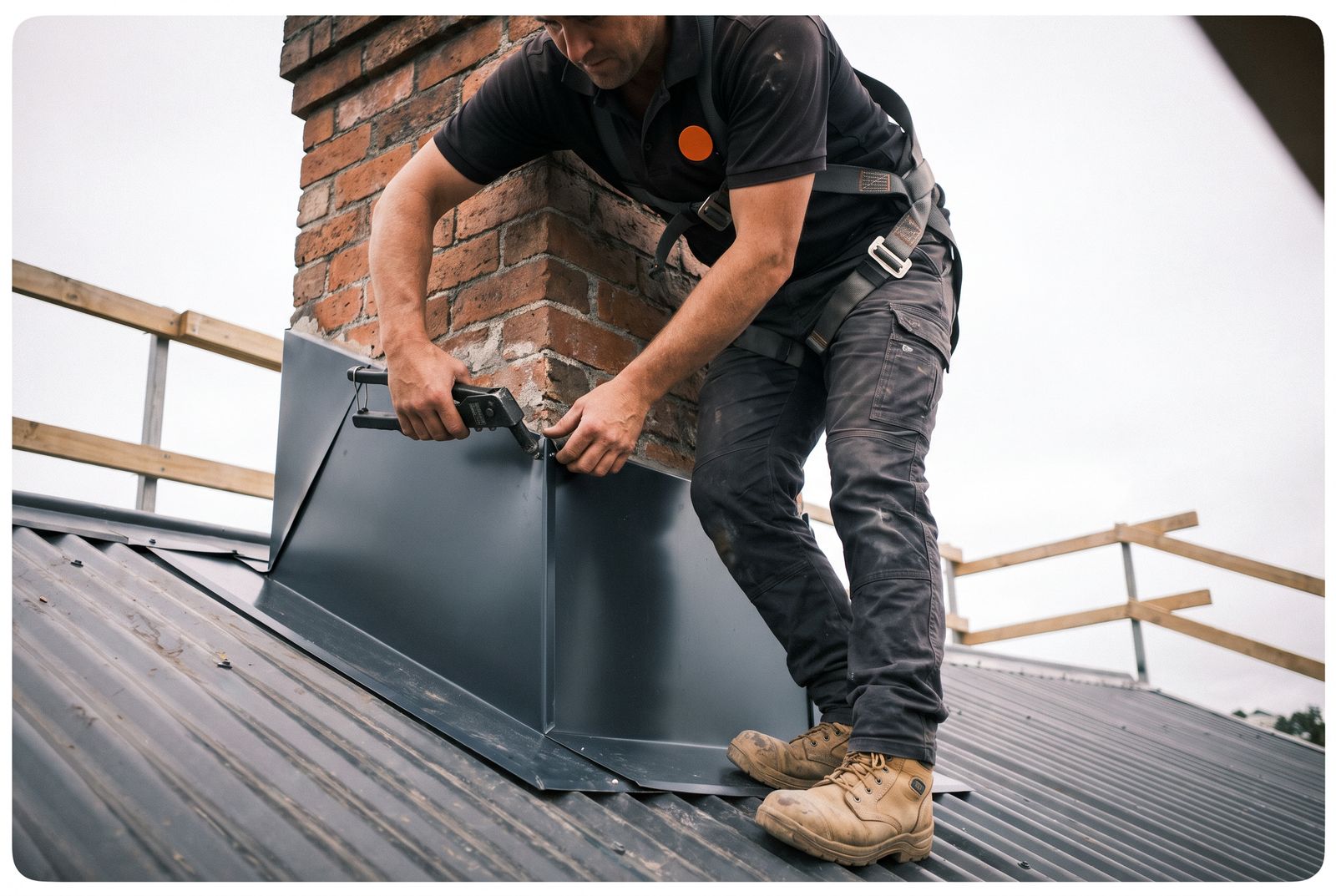 Roof FlashingFlashings around chimneys, skylights, walls and valleys cause most leaks.
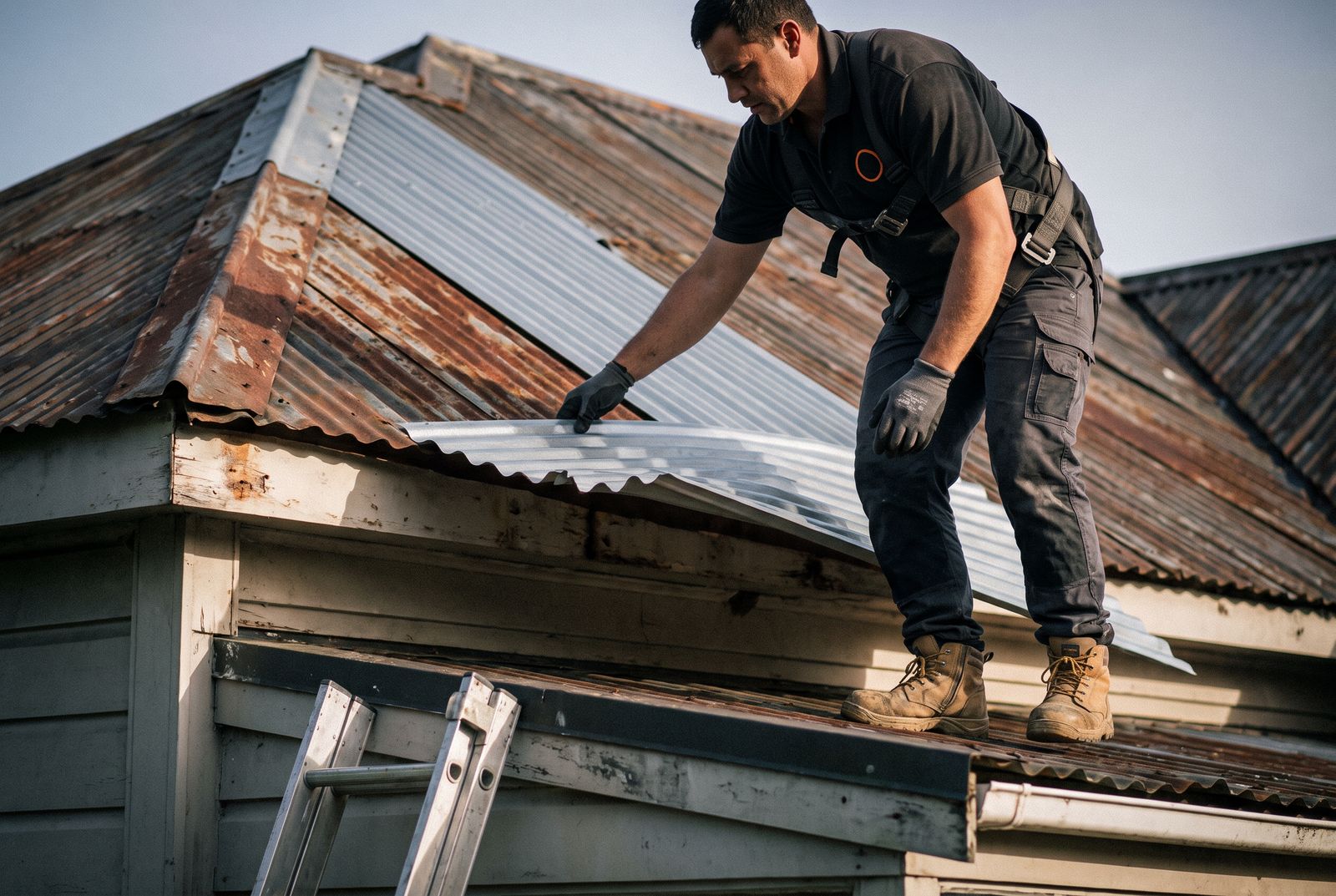 Roof RepairsLeaks, loose sheets, failed flashings and cracked tiles repaired properly, with photos of what we found and fixed.
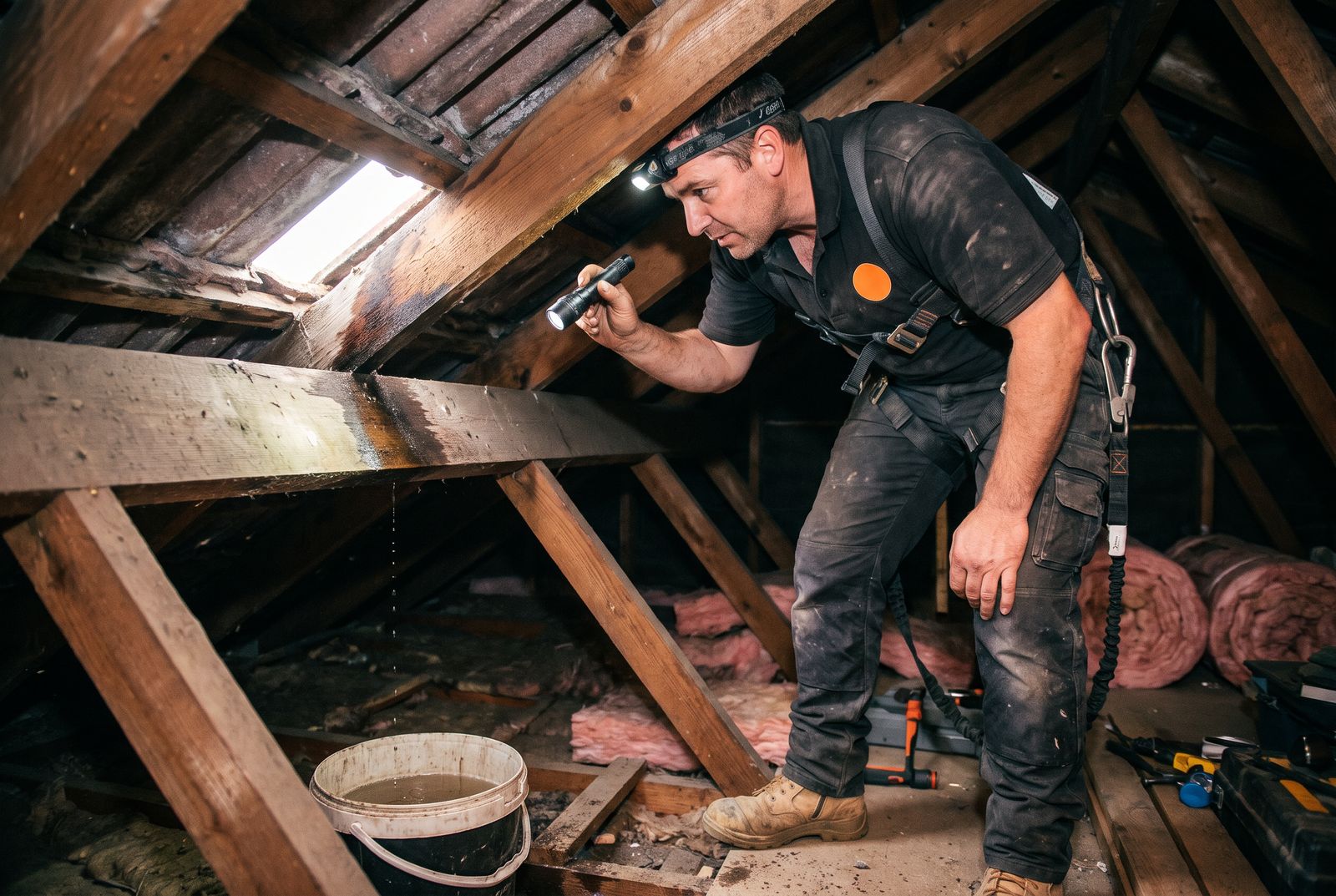 Roof Leak RepairsWe track a leak to its source, which is often nowhere near the stain on your ceiling, and fix the cause.
Read Next
Why Your Ceiling Drips on Frosty Christchurch Mornings
A ceiling that drips on a frosty Christchurch morning, with no rain overnight, is usually condensation rather than a lea...
Read article
Removing a Chimney in Christchurch: Consent, Roof Patching and Safety
Most Christchurch homeowners can remove a brick chimney without building consent, as long as the building is no more tha...
Read article
Do You Need Building Consent to Re-Roof in Christchurch?
Usually not, if the new roof replaces the old one with comparable materials in the same position. Schedule 1 of the Buil...
Read article